

As investors, we constantly navigate the shifting tides of the financial world. One moment, everything seems to be charging forward; the next, a sudden downturn has everyone scrambling for safety. Understanding the fundamental differences between these cycles, and having the right strategies in place is what separates successful long-term investors from those who simply react to headlines.
In this comprehensive guide, we will explore effective bull vs bear market trading strategies, helping you understand not just what these terms mean, but how to actively manage your capital regardless of which animal is currently dominating Wall Street. Whether you are wondering how to ride a massive upward wave or how to protect your portfolio during a crushing downturn, mastering the nuances of a bull market vs bear market is essential.
Key Takeaways:
- Bull Markets: Characterized by rising prices (typically 20%+ from lows), strong economic indicators (GDP growth, low unemployment), and optimistic investor sentiment. Strategy: Focus on growth, momentum trading, “buy and hold,” and buying the dip.
- Bear Markets: Characterized by falling prices (typically 20%+ from highs), weakening economic conditions, and widespread fear. Strategy: Focus on capital preservation, defensive sectors (utilities, healthcare), short selling, and dollar-cost averaging into undervalued assets.
- The Golden Rule: Never try to perfectly time the top or the bottom. Instead, rely on data-driven strategies and dynamic asset allocation to adapt to the current environment.
Defining the Core Concepts
Before we dive into the specific tactics, we need to establish a clear understanding of the exchange environments we are trading in. The phrases “bull” and “bear” are thrown around constantly on financial news networks, but what do they actually mean in practice?
What is a Bull Market?
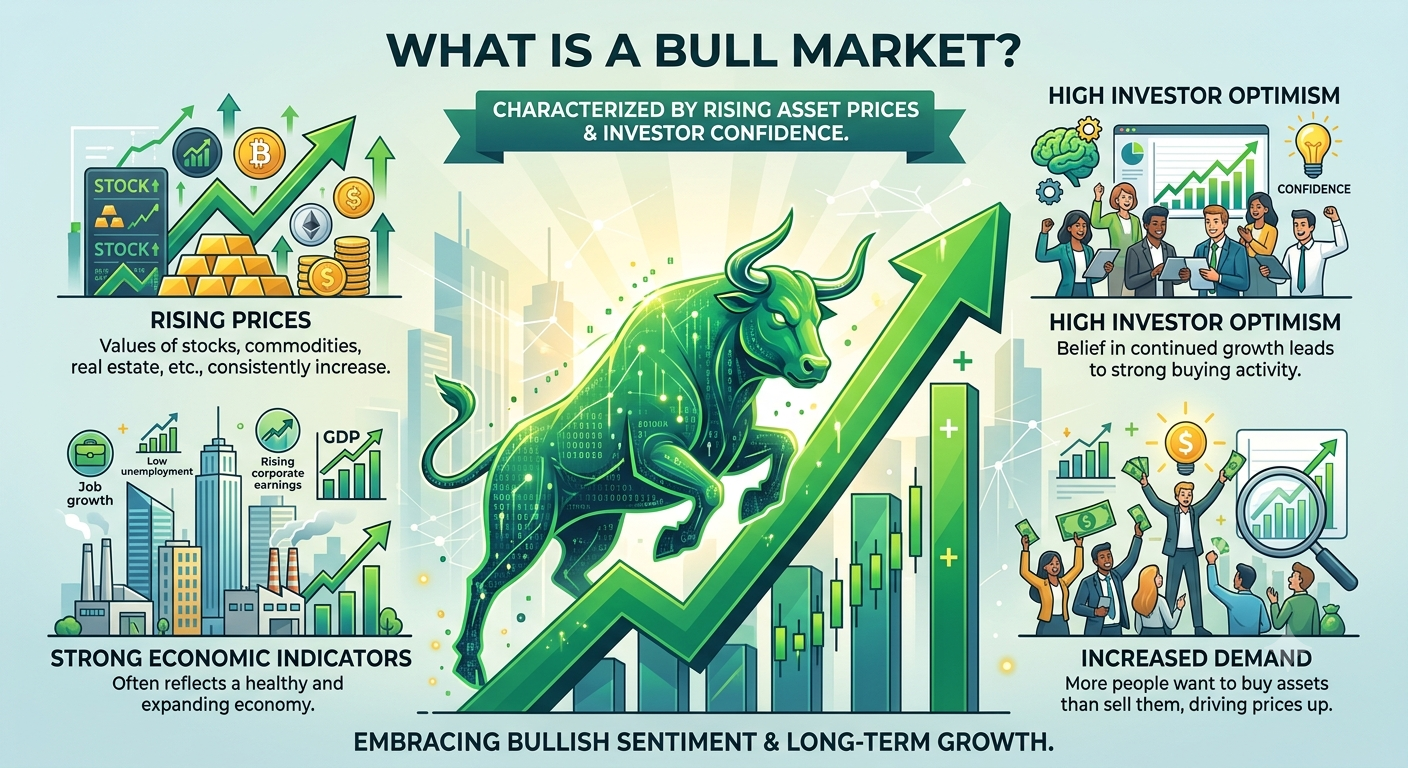
A bull market is a prolonged period in financial markets where asset prices are rising or are expected to rise. The most common benchmark used to define a bull market is a price increase of 20% or more from recent significant lows, sustained over a period of weeks, months, or often years.
When we are in a bull market, the broader economic backdrop usually supports this optimism. We typically see:
- Expanding GDP: The economy is growing.
- High Corporate Profitability: Companies are beating earnings expectations.
- Low Unemployment: The job market is healthy.
- Investor Euphoria: There is a general feeling of confidence, and often, a fear of missing out (FOMO) that drives prices even higher.
What is a Bear Market?
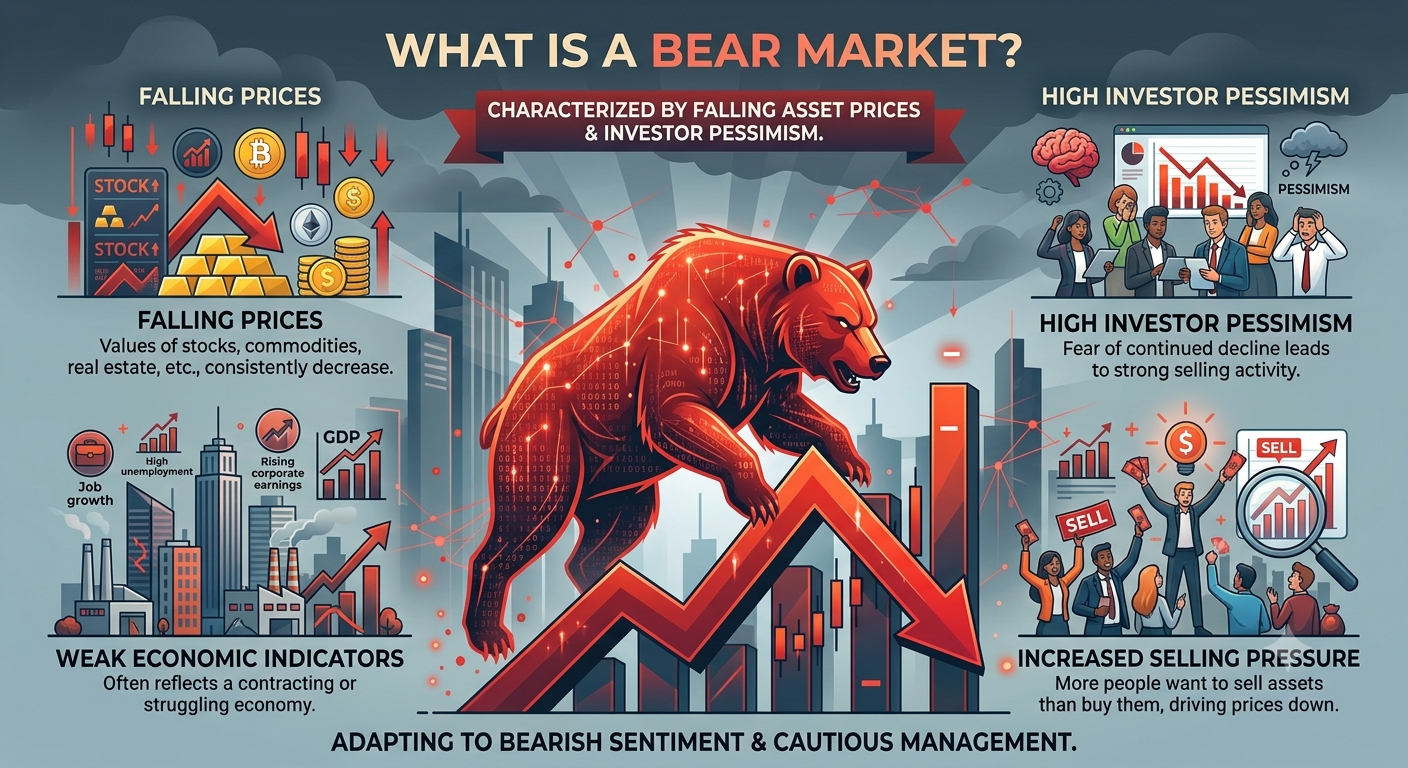
Conversely, a bear market is defined as a prolonged period where asset prices fall by 20% or more from their recent highs. This is not just a temporary dip or a “correction” (which is typically defined as a 10% to 19% drop). A true bear market reflects a fundamental shift in economic reality and investor psychology.
During a bear market, we usually observe:
- Slowing or Declining GDP: Economic growth stagnates or goes into recession.
- Weakening Corporate Earnings: Companies struggle to maintain profit margins.
- Rising Unemployment: Layoffs increase and hiring freezes become common.
- Widespread Fear and Pessimism: Investors panic, leading to massive sell-offs that create a self-fulfilling cycle of declining prices.
The Origins of the Terms
If you’ve ever wondered why we use these specific animals to describe financial trends, it comes down to how they attack. A bull thrusts its horns upward into the air, symbolizing rising prices. A bear, on the other hand, swipes its paws downward, symbolizing a market in decline.
Bear Market vs Bull Market: Core Differences
To effectively implement bull vs bear market trading strategies, we must first be able to rapidly identify the current environment. Relying on intuition is a recipe for disaster; we must look at the data.
Here is a quick reference table highlighting the key differences in a bear market vs bull market:
| Feature | Bull Market | Bear Market |
| Price Direction | Rising 20%+ from recent lows | Falling 20%+ from recent highs |
| Economic Backdrop | Expanding GDP, robust job market | Slowing growth, rising unemployment, potential recession |
| Investor Sentiment | Optimistic, confident, greedy (FOMO) | Fearful, pessimistic, panic-driven |
| Trading Volume | Consistently rising, especially on breakouts | High during panic sell-offs, low on brief “relief rallies” |
| Volatility (VIX) | Generally lower and stable | Generally elevated and erratic |
| Historical Average Duration | ~9.1 Years (S&P 500) | ~1.4 Years (S&P 500) |
| Primary Goal | Maximize capital growth | Capital preservation, strategic accumulation |
As the data shows, bull markets tend to last significantly longer and generate higher cumulative gains than bear markets generate losses. However, the emotional toll of a bear market can lead investors to make catastrophic errors if they lack a solid plan.
Bull Market Strategies: Maximizing the Uptrend
When we are in a strong bull market, the general trend is our friend. The primary objective shifts from defense to offense. We want to maximize our returns while the macroeconomic wind is at our backs. However, this doesn’t mean we should throw caution to the wind. Even the strongest bull and bear cycles have their traps.
Here are the most effective strategies to deploy when the bulls are running:
Strategy 1: Buy and Hold (Position Trading)
This is the most traditional and often the most successful strategy during a prolonged bull market. The concept is simple: we buy strong, fundamentally sound assets and hold onto them for the duration of the cycle.
We resist the urge to trade in and out of the market based on daily news. By staying invested, we allow compounding returns to work their magic. We look for companies with strong earnings growth, solid management, and a competitive advantage in their industry.
Strategy 2: Buying the Dip
Even in the most aggressive bull market, asset prices do not go up in a straight line. There will always be pullbacks, shakeouts, and temporary corrections (drops of 5% to 10%).
“Buying the dip” means using these temporary declines as opportunities to add to our positions at a discount. Instead of panicking when a favorite stock drops 8% on a random Tuesday, we view it as a sale. The assumption here is that the overarching upward trend remains intact, and the price will eventually recover and make new highs.
Strategy 3: Momentum Trading
Momentum traders look for assets that are already moving strongly upward and jump on board, hoping the trend will continue. This strategy relies heavily on technical analysis.
We look for stocks that are breaking out of consolidation patterns on high trading volume. We might use indicators like the Relative Strength Index (RSI) or Moving Average Convergence Divergence (MACD) to confirm that the upward momentum is strong. When the momentum begins to wane, we exit the position. This requires more active management than a simple buy-and-hold approach.
Strategy 4: Sector Rotation (Offensive)
Different sectors of the economy perform better at different stages of a bull market. In the early stages of a recovery, cyclical sectors like technology, consumer discretionary, and industrials often lead the way.
As the cycle matures, we might rotate our capital into sectors that benefit from late-stage economic expansion, such as energy or materials. By actively moving our capital into the sectors showing the most relative strength, we can outperform the broader index.
The Danger of a Bull Market: Overconfidence
The biggest risk we face in a bull market is our own psychology. When almost every trade turns a profit, it’s easy to mistake a rising tide for our own genius. This leads to overconfidence, ignoring risk management protocols, and taking on too much leverage. We must always remember that every bull and bear market cycle eventually ends. We must maintain our discipline even when euphoria surrounds us. Read more about Crypto Trading Mistakes.
Bear Market Strategies: Surviving and Accumulating
When the economic data sours and investor sentiment shifts from greed to fear, we enter a bear market. The strategies that worked brilliantly just months ago will now result in devastating losses. Our primary goal shifts from aggressive growth to capital preservation, while simultaneously looking for generational buying opportunities.
Navigating a bear vs bull market requires a complete shift in mindset. Here is how we adapt:
Strategy 1: Shift to Defensive Sectors
When the broader market is falling, not all stocks fall at the same rate. Defensive sectors provide goods and services that people need regardless of the economic climate.
We rotate our capital into areas like:
- Consumer Staples: Food, basic household goods.
- Healthcare: Pharmaceuticals, medical devices.
- Utilities: Electricity, water (often providing stable dividends).
While these stocks may still decline in a severe bear market, they generally fall much less than high-growth technology or consumer discretionary stocks.
Strategy 2: Dollar-Cost Averaging (DCA)
Trying to catch a falling knife, meaning trying to buy exactly at the bottom of a bear market, is nearly impossible and highly dangerous. Instead, we use Dollar-Cost Averaging.
We allocate a fixed amount of money to invest at regular intervals (e.g., every month), regardless of the asset’s price. When prices are high, we buy fewer shares. When prices crash, our fixed dollar amount buys more shares. Over time, this smooths out our average purchase price and ensures we are accumulating assets when they are “on sale,” without the stress of trying to time the perfect bottom.
Strategy 3: Holding Cash
In a brutal bear market, cash is a valid position. Sometimes, the best trade is no trade at all.
By raising our cash levels as we see the macroeconomic environment deteriorating, we accomplish two things. First, we protect that capital from market drawdowns. Second, and more importantly, we create a war chest of “dry powder.” When the market eventually bottoms out and blood is in the streets, we have the liquidity ready to deploy into incredible opportunities that fully invested traders will miss.
Strategy 4: Short Selling (Advanced)
For experienced traders, a bear market is an opportunity to profit directly from falling prices through short selling.
This involves borrowing shares of an asset we believe is overvalued, selling them at the current high price, and hoping to buy them back later at a much lower price to return to the lender, pocketing the difference.
Warning: Short selling carries theoretically unlimited risk (as a stock’s price can technically rise to infinity). It requires strict stop-loss orders and constant monitoring. It is not recommended for novice investors.
The Danger of a Bear Market: Panic Selling
The greatest threat to our long-term wealth during a bear market is our own fear. The psychological pain of watching a portfolio bleed value can drive us to capitulate, selling our assets at the absolute bottom just to stop the pain.
We must remember that, historically, the stock market has always recovered from bear markets and gone on to reach new all-time highs. By selling in a panic, we lock in our losses and guarantee that we will miss the inevitable recovery rally.
How to Spot a Changing Trend
The most challenging aspect of implementing bull vs bear market trading strategies is knowing when the cycle is actually changing. A 10% drop could be a healthy correction in a continuing bull market, or it could be the first leg down of a devastating bear market.
We must analyze a combination of factors to determine the true trend of a bear vs bull environment:
Fundamental Indicators
We look at the underlying health of the economy:
- Interest Rates: Are central banks aggressively hiking rates to combat inflation? (Bearish) Or are they cutting rates to stimulate growth? (Bullish)
- Corporate Earnings Guidance: Are CEOs warning of slowing sales and shrinking margins? If forward guidance is broadly negative, the market will likely trend downward.
- Yield Curve: A “flattening” or “inverted” yield curve (where short-term Treasury yields are higher than long-term yields) is a historically reliable leading indicator of an impending recession and bear market.
Technical Indicators
We look at price action and market structure:
- Moving Averages: The 200-day moving average is a crucial indicator. If major indices (like the S&P 500) fall below their 200-day moving average and stay there, it strongly suggests a bearish trend change.
- Market Breadth: Are the market gains being driven by just a few massive companies, or are most stocks participating in the rally? Weakening breadth (where the index rises but fewer individual stocks are going up) often precedes a market top.
- Lower Highs and Lower Lows: A defining characteristic of a downtrend is when every subsequent rally fails to reach the previous high, and every subsequent sell-off breaks below the previous low.
The Psychology of Bull and Bear Markets
We cannot discuss bull and bear market strategies without addressing the psychological warfare that takes place in an investor’s mind. The market is ultimately a reflection of collective human emotion, primarily greed and fear.
The Cycle of Emotions
- Optimism (Early Bull): We see positive signs and start deploying capital.
- Belief (Mid Bull): Our trades are working; we feel smart.
- Euphoria (Late Bull): We believe the market will never go down. We ignore risks, use leverage, and buy overvalued assets. This is usually when the market peaks.
- Anxiety (Early Bear): The market dips. We assume it’s just a correction.
- Denial (Mid Bear): The market keeps falling. We hold onto losing positions, refusing to accept that the trend has changed.
- Panic & Capitulation (Late Bear): The pain is too much. We sell everything at the exact wrong time, near the bottom.
- Depression (Bottom): We swear we will never invest again.
- Hope (New Bull): The cycle begins anew.
To succeed, we must operate contrary to our natural emotional instincts. We must become cautious when others are euphoric, and we must find the courage to buy when others are panicking. As Warren Buffett famously said, we must strive to be “fearful when others are greedy, and greedy when others are fearful.”
Structuring a Resilient Portfolio
The truth is, no one can predict with 100% accuracy when a bear and bull cycle will begin or end. If we constantly try to perfectly time the market, we will eventually be wrong, and the consequences can be severe.
Therefore, the most advanced strategy is not to rely on predicting the future, but to build a portfolio designed to survive and adapt to any condition.
Asset Allocation
We don’t just hold stocks. We diversify across asset classes that behave differently under various economic pressures:
- Equities (Stocks): For growth during a bull market.
- Fixed Income (Bonds): For stability and income during a bear market. (When stock prices fall, bond prices often rise as investors flee to safety).
- Commodities/Gold: Often act as a hedge against inflation and currency devaluation.
- Cash: For liquidity and opportunistic buying.
Dynamic Rebalancing
If we set our target allocation at 60% stocks and 40% bonds, a raging bull market might push our stock portfolio to 75% of our total value.
We don’t just leave it there. We regularly rebalance. We sell some of our winning stocks (taking profits) and buy more bonds to return our portfolio to the 60/40 target. This forces us to automatically sell high and buy low, naturally adjusting our risk exposure as the bear vs bull dynamics change.
Conclusion: Mastering the Cycles
Understanding the dynamics of a bull vs bear market is not about finding a magic formula to guarantee endless profits. It is about developing a structured, disciplined framework for decision-making.
When the bull bear cycle favors growth, we use momentum and buy-and-hold strategies to maximize our gains, always remaining vigilant for signs of overextension. When the cycle turns deeply bearish vs bullish, we pivot to defense, utilizing dollar-cost averaging and defensive sector rotation to protect our capital and accumulate undervalued assets for the next inevitable upswing.
By learning to interpret the macroeconomic data, managing our emotional responses, and implementing a diversified, adaptable portfolio strategy, we can stop reacting with panic or euphoria. Instead, we can confidently execute our plan, ensuring long-term financial success regardless of which animal is currently roaming Wall Street.
Frequently Asked Questions (FAQ)
What is the simple difference between a bull market vs bear market?
A bull market occurs when asset prices are rising (usually 20% or more) and the economy is strong. A bear market occurs when asset prices are falling (20% or more) and economic conditions are weakening.
How long does a bear market usually last compared to a bull market?
Historically, bull markets are much longer. Since the 1920s, the average S&P 500 bull market has lasted roughly 9 years, while the average bear market has lasted about 1.4 years.
Is it safe to invest during a bear market?
Yes, if done strategically. While a bear market feels scary, it is historically the best time to buy assets at a discount. Strategies like Dollar-Cost Averaging (investing a set amount regularly) allow you to safely build positions while prices are low, setting you up for massive gains when the next bull market begins.
Can a bull market happen during a recession?
It is rare, but possible. The stock market is forward-looking. A new bull market often begins before a recession has officially ended, because investors are anticipating the future economic recovery and pricing it in early.
What does it mean if the market is just trading sideways?
When the market is neither clearly bullish vs bearish, but rather bouncing between a set high and low range without a distinct trend, it is considered a “consolidating” or “range-bound” market. Traders often use different strategies here, such as buying at the bottom of the range (support) and selling at the top (resistance).
Disclaimer: This article is for informational and educational purposes only and does not constitute financial advice. All investments carry risk, including the possible loss of principal. Always conduct your own research or consult with a licensed financial advisor before making investment decisions.
Disclaimer: The material in this article is not financial or investment advice. Everything stated here reflects the author's personal view and should not be treated as a recommendation to trade or invest. We make no warranties regarding the accuracy, reliability or completeness of the information presented. Cryptocurrency markets are highly volatile and can move unpredictably. Before committing any funds, every investor, trader or crypto user should study several independent sources and check the regulations that apply in their own jurisdiction.