
When you ask what is Binance Smart Chain, you’re really asking about the system that finally made Web3 accessible to normal people. But things have changed a lot since it first launched. If you want to actually navigate the 2026 crypto market, you have to get a grip on how this platform grew into a massive multi-chain ecosystem.
Anyone who’s dabbled in decentralized finance (DeFi) knows the pain of Ethereum gas fees. Nobody wants to fork over $50 just to approve a basic token swap, it completely prices out the average person. That shared frustration is exactly what sparked the creation of one of today’s most heavily used blockchain networks.
The Evolution from BSC to BNB Chain
The blockchain space doesn’t wait for anyone. What originally felt like a quirky, experimental alternative to Ethereum has quietly morphed into an absolute pillar of the digital economy.
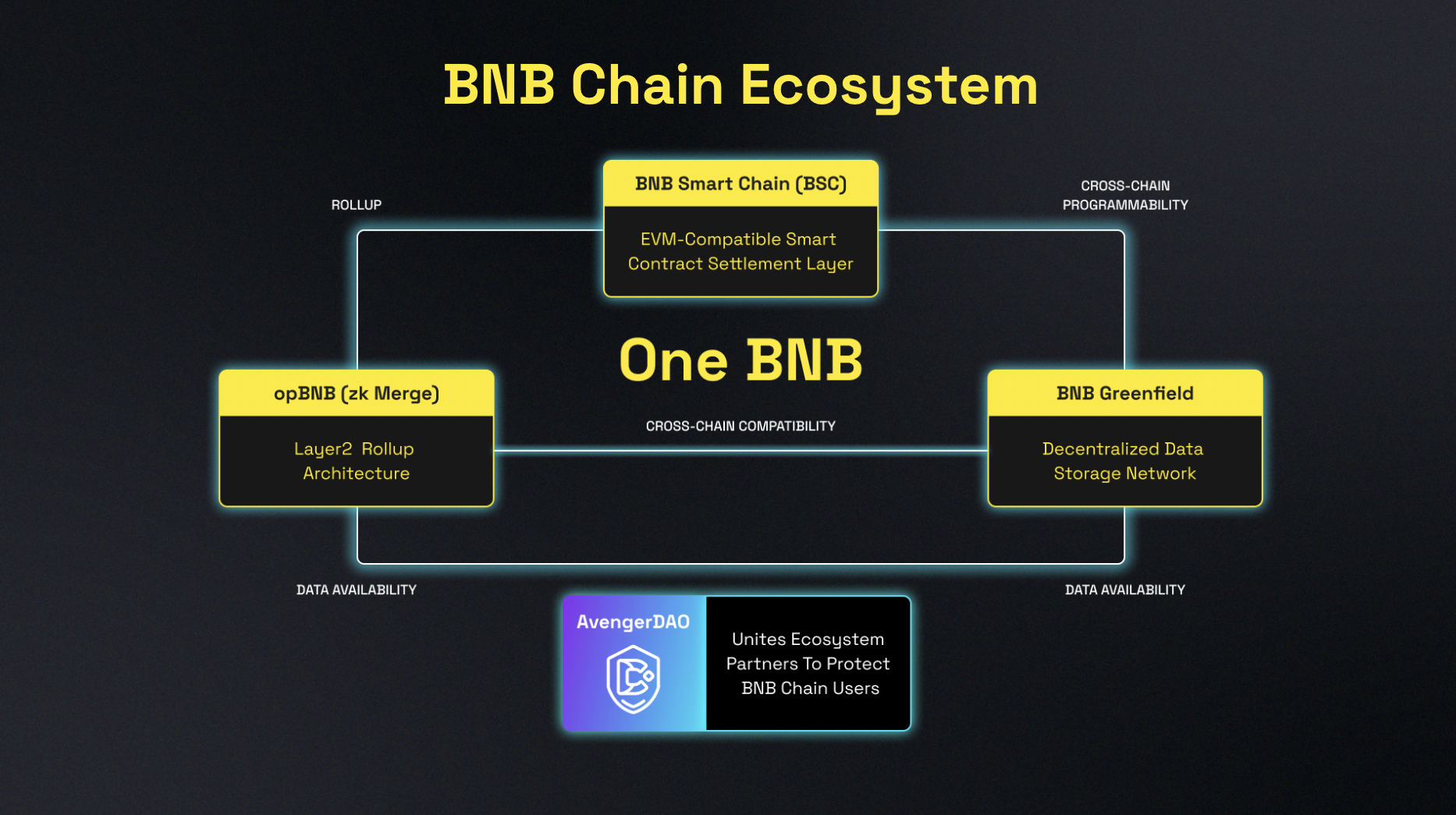
BNB Smart Chain (BSC) is a fast, EVM-compatible blockchain built to run smart contracts and decentralized apps. As a core piece of the BNB Chain ecosystem, it relies on a Proof of Staked Authority (PoSA) consensus model, meaning transactions are drastically cheaper and faster than Ethereum’s.
Defining the Network: What Exactly is BNB Smart Chain?
So, what is BSC crypto when you get right down to it? Picture the BSC network as a giant, global operating system that isn’t owned by anyone. Developers use it to write smart contracts: code that executes automatically without a middleman. That’s how people are able to launch decentralized exchanges, lending apps, and even games straight onto the blockchain.
The 2022 Rebranding: Why “Binance” Became “Build and Build”
Source: Coolwallet
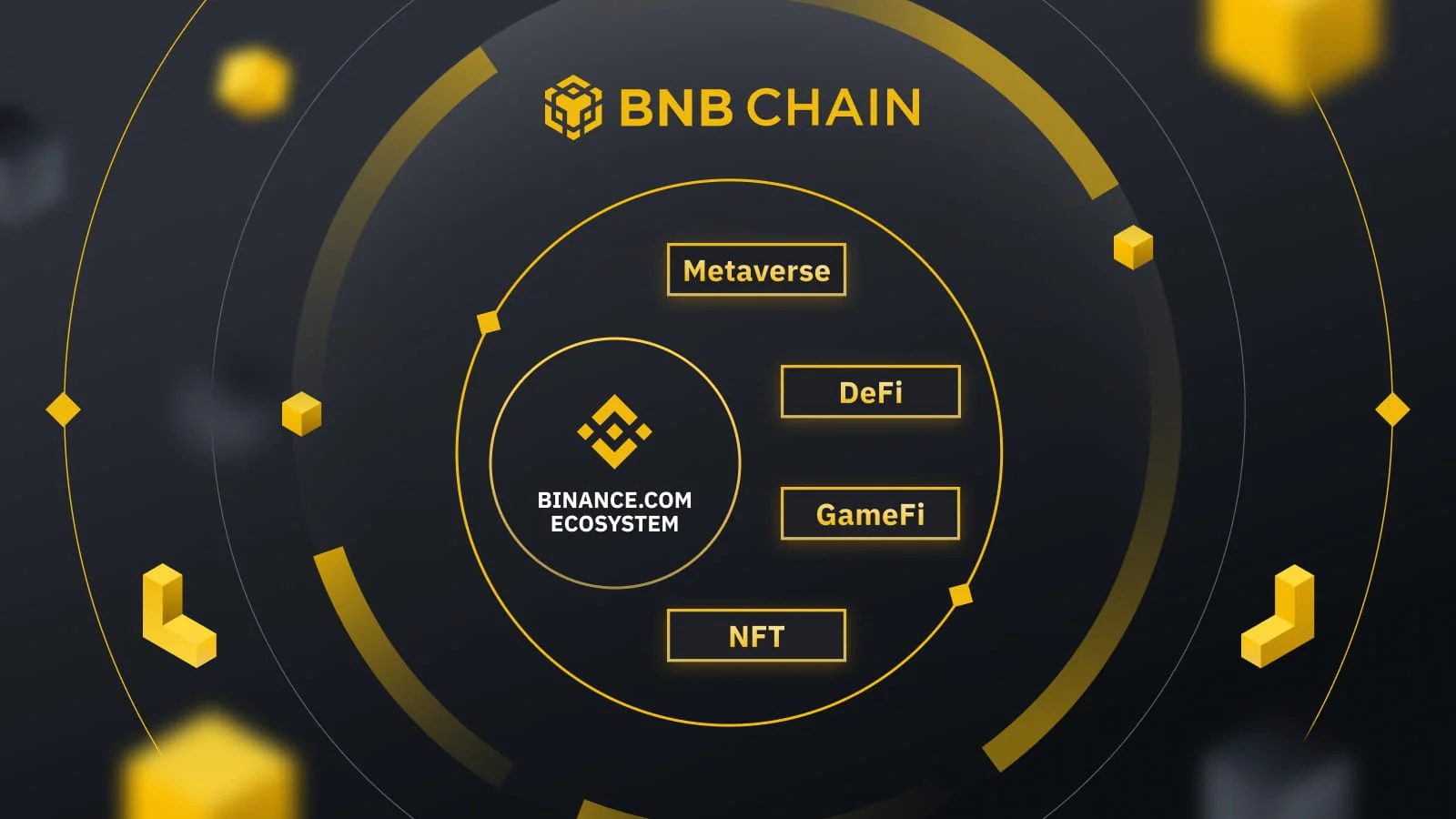
Honestly, if the names confuse you, you’re in good company. Back in 2022, the original Binance Smart Chain went through a huge rebranding phase. The creators wanted to prove the network was run by the community, entirely separate from the centralized Binance exchange. So, they changed the acronym; BNB suddenly stood for “Build and Build.” Plenty of old-school traders still call it BSC Binance or the BSC Smart Chain, but officially? The whole setup is now just the BNB Chain.
BSC in 2026: Its Role as the Hub of a Multi-Chain Universe
Fast forward to 2026, and when people ask what is BSC, they aren’t talking about one isolated blockchain anymore. The Binance SmartChain has grown up. It’s now the anchor point for an entire multi-chain universe, serving as the main security layer for blazing-fast Layer-2 networks and decentralized storage drives. It handles the kind of heavy data traffic that would break older blockchains.
How Does BNB Smart Chain Work? The Technical Architecture
If you really want to grasp the BSC meaning crypto veterans talk about, we need to pop the hood and look at the actual tech making these lightning-fast trades possible.
Proof of Staked Authority (PoSA): How BSC Balances Speed and Security
Let’s compare it to Ethereum, which relies on a Proof of Stake (PoS) system using hundreds of thousands of validators. That setup is incredibly decentralized, sure, but it bogs down easily. To fix this, the BSC Chain runs on a customized model known as Proof of Staked Authority (PoSA).
With PoSA, the heavy lifting is done by a much smaller, hand-picked group of active validators. Historically there were just 21, though they’ve expanded that list recently to spread the power out a bit more. Since you don’t have thousands of computers arguing over the state of the ledger, transactions get approved in roughly three seconds.
Ethereum Virtual Machine (EVM) Compatibility
You might wonder why developers rushed to the BSC network in the first place. It all comes down to EVM compatibility. Basically, if a developer spent six months building an app for Ethereum, they could just copy and paste their code right onto BSC. It worked perfectly right out of the box. Users didn’t even have to change their wallet formats. That easy transition is exactly how the network managed to steal so much talent and money from its rivals.
Dual-Chain Architecture: Beacon Chain and Smart Chain
Historically, the ecosystem ran on a dual-chain architecture. The Beacon Chain handled governance and staking, while the Smart Chain handled all the DeFi applications. Recently, the community decided to merge these functions to streamline operations, rolling the Beacon Chain’s responsibilities directly into the main Binance Smart Chain BSC architecture for better capital efficiency.
BNB Token: The Fuel of the Ecosystem
Source: BNB chain docs
You cannot operate on the network without its native asset. The BNB token is the absolute lifeblood of the chain.
Utility and Governance: What Can You Do with BNB in 2026?
BNB serves multiple purposes. First, it is the currency you use to pay “gas” (transaction fees) anytime you do anything on the network. Second, it acts as a governance token. If you hold BNB, you can vote on critical protocol upgrades and the future direction of the blockchain.
The “Auto-Burn” Mechanism
Unlike fiat currencies that face infinite printing, BNB has a deflationary mechanism called the Auto-Burn. A portion of the gas fees collected on the network is permanently destroyed (burned) based on a mathematical formula tied to the token’s price and network activity. The ultimate goal is to reduce the total supply of BNB to exactly 100 million tokens, naturally increasing scarcity over time.
Staking BNB: Earning Passive Income
If you plan to hold BNB long-term, you don’t have to just leave it sitting idle. By delegating your tokens to a network validator, you are helping to secure the blockchain. In return for your contribution, the protocol rewards you with a steady, compounding APY paid out in newly generated BNB.
BSC vs. Ethereum: Why Millions Choose the Yellow Chain
The easiest way to understand the what is Binance Smart Chain question is to directly compare it to its biggest rival. Let’s look at the hard data. Read more on Binance Smart Chain vs Ethereum.
| Network | Avg. Transaction Fee | Block Time | Consensus Mechanism |
| Ethereum | $5.00 – $15.00 | ~12 seconds | Proof of Stake (PoS) |
| BSC | $0.05 – $0.10 | ~3 seconds | Proof of Staked Authority (PoSA) |
| opBNB | $0.001 | ~1 second | Optimistic Rollup (L2) |
Transaction Speeds and Throughput: Comparing Block Times
As the table shows, Ethereum processes a new block roughly every 12 seconds. BSC completes a block in just 3 seconds. When you are trying to execute a high-frequency arbitrage trade or buy an NFT during a hyped mint, those 9 seconds make the difference between a massive profit and a failed transaction.
Gas Fees: How Much Do You Really Save on BSC?
During peak bull market mania, executing a complex smart contract on Ethereum can cost upwards of $100. On the BSC network, that exact same transaction will rarely cost you more than a few dimes. This hyper-efficiency is what initially allowed retail investors with smaller portfolios to actually participate in DeFi.
Decentralization vs. Efficiency
Ethereum purists often point out that the BSC Chain sacrifices decentralization for speed. Because it relies on a smaller validator set with high hardware requirements, it is technically less decentralized than Ethereum. However, for the vast majority of everyday users, the trade-off of paying $0.05 in fees instead of $50 is a compromise they are more than willing to make.
Expanding the Horizon: opBNB and BNB Greenfield
Here is where legacy guides completely fail you. Since 2025, the ecosystem has aggressively expanded to capture modern “Big Data” and high-frequency use cases.
opBNB: The Layer 2 Solution for Ultra-Low-Cost Gaming and Social Apps
As the main network became more congested, developers realized they needed an even faster solution. Enter opBNB. Built using the Optimism OP Stack, opBNB is a Layer-2 scaling solution that sits on top of the main BSC network.
Over the last year, a massive wave of high-frequency decentralized applications, particularly Web3 games and social media platforms,have migrated to opBNB. Why? Because it offers block times of one second and transaction fees that cost fractions of a single cent ($0.001). It takes the security of the main network and hyper-scales the execution.
BNB Greenfield: Decentralized Data Storage for the Web3 Era
The second pillar of this modern expansion is BNB Greenfield. Blockchains are terrible at storing large files; putting a high-resolution image directly on a ledger would cost millions. Greenfield is a decentralized data storage network built alongside BSC. It allows users and decentralized applications to store their data, website hosting files, and NFT media natively within the ecosystem. It acts as the Web3 equivalent of Amazon Web Services (AWS).
Cross-Chain Interoperability: How Assets Move Within the BNB Ecosystem
Because BSC, opBNB, and Greenfield are all fundamentally connected, moving assets and data between them is frictionless. A gaming studio can issue tokens on BSC, run their game logic on opBNB to save users money on gas, and store their 3D game assets on Greenfield. It is a completely self-contained, highly efficient tech stack.
The BSC Ecosystem: DeFi, NFTs & Gaming
What are people actually doing on the Binance Smart Chain BSC today? The ecosystem is absolutely massive.
Top DeFi Protocols: PancakeSwap, Venus, and Beyond
PancakeSwap remains the undisputed king of decentralized exchanges on the network. It allows users to swap any token instantly using automated liquidity pools. Following closely is Venus Protocol, a decentralized money market where users can lend their crypto to earn interest or borrow assets by using their portfolio as collateral.
The NFT Marketplace: Trading Digital Art with Low Fees
While Ethereum dominates the high-end, blue-chip NFT market, BSC has carved out a massive niche for accessible digital collectibles. Because minting and transferring NFTs costs pennies, it is the preferred network for utility-based NFTs, event ticketing, and community badges.
Web3 Gaming (GameFi): Why BSC is the Premier Choice
Play-to-Earn (P2E) gaming requires constant micro-transactions. If a player needs to claim a sword or harvest digital crops, they can’t pay a $5 gas fee. This is why the overwhelming majority of popular GameFi projects launch here, leveraging the speed of the base chain and the microscopic fees of opBNB.
Security and Safety on BNB Smart Chain
The combination of low fees and high adoption naturally attracts bad actors. Knowing how to protect your BSC crypto is vital.
The “AvengerDAO” Initiative: Protecting Users from Scams and Exploits
To combat phishing and malicious smart contracts, the ecosystem launched AvengerDAO. This is a community-driven security initiative that integrates directly into wallets to flag suspicious contracts before you interact with them. It acts as a decentralized antivirus for your transactions.
How to Read a BscScan: Tracking Your Transactions
BscScan is the official block explorer for the network. It is basically the search engine for the blockchain. By pasting your wallet address into BscScan, you can see a transparent history of every transaction you have ever made, verify the code of a smart contract before you deposit funds, and track where your money actually went.
Best BSC Wallets: From Binance Web3 Wallet to Trust Wallet and MetaMask
Source: Binance
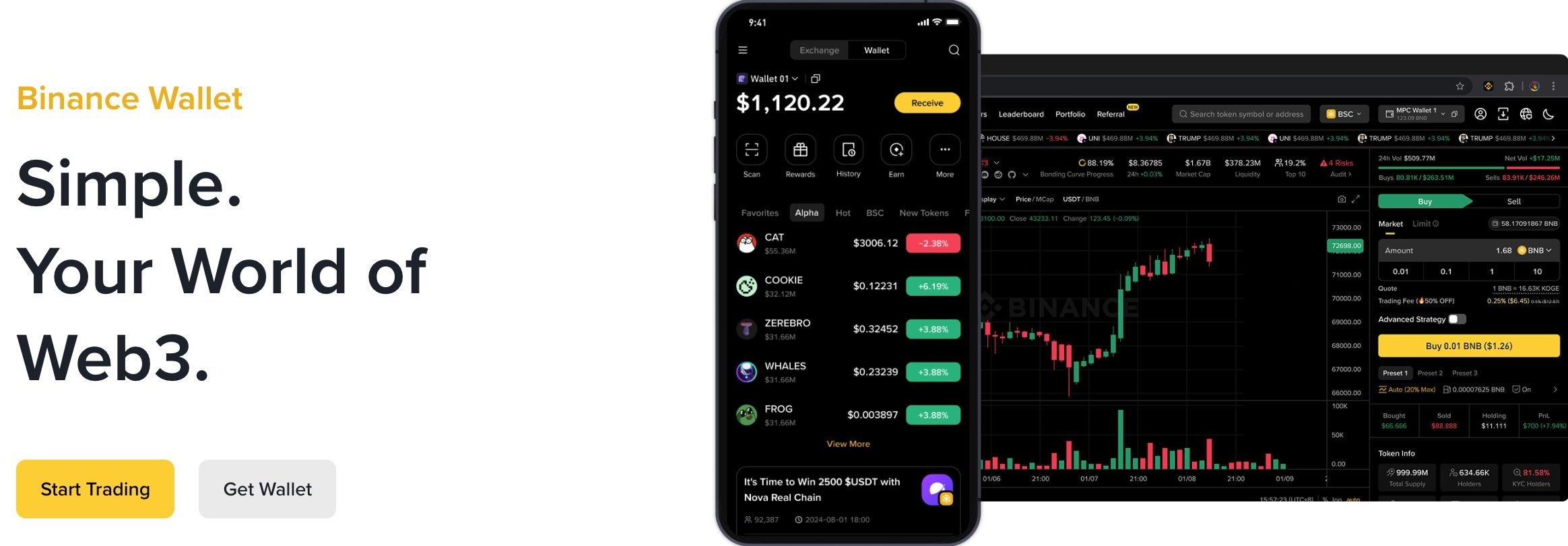
You cannot access the network without a dedicated interface. Trust Wallet is widely considered the ultimate Binance Smart Chain wallet because it natively supports the ecosystem out of the box.
However, if you are a DeFi veteran, MetaMask remains incredibly popular. You simply add the custom RPC details to connect it to the network. Additionally, the new Binance Web3 Wallet, built directly into the centralized exchange app, has made it easier than ever for retail users to create a secure BSC wallet without dealing with complicated seed phrases.
How to Get Started on BNB Smart Chain in 2026
Ready to dive in? Here is your quick-start guide to accessing the network.
Setting Up Your Wallet and Connecting to the BSC Network
If you download Trust Wallet, the network is already configured. If you are using MetaMask, you will need to manually add the network. Go to your settings, add a new network, and input the official BSC RPC URL, Chain ID (56), and Symbol (BNB).
Bridging Assets: Moving Tokens from Ethereum or Solana to BSC
If you already have funds on another blockchain, you don’t need to sell them. You can use decentralized bridges to transfer your USDT or ETH directly over to the BSC network. The bridge locks your assets on Ethereum and mints equivalent wrapped assets on the destination chain.
Buying Your First BNB
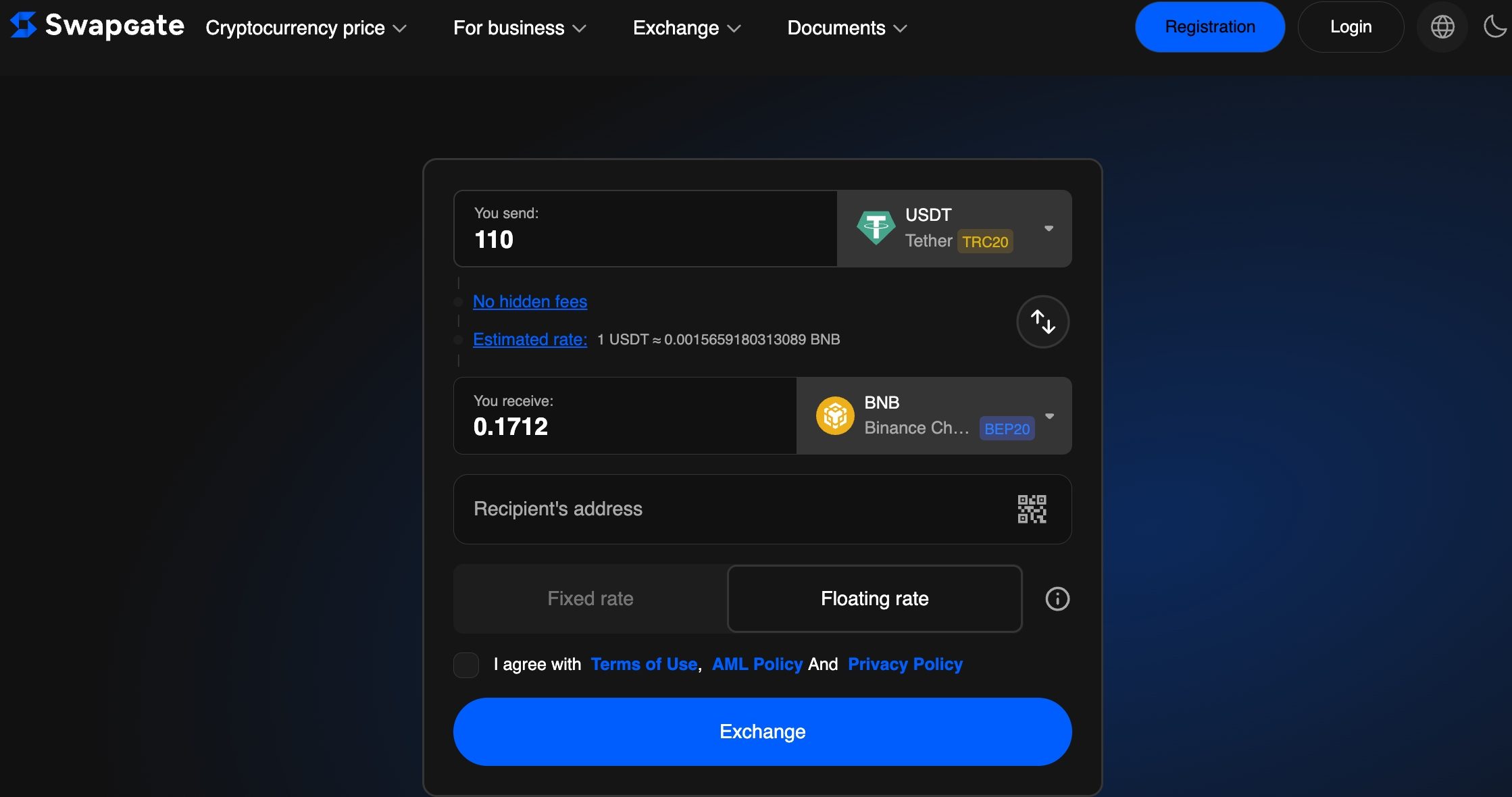
To do anything, you need gas. The easiest way to acquire your first fraction of BNB is to purchase it on a centralized exchange with fiat currency and withdraw it to your personal BSC wallet address. Alternatively, if you bridged over stablecoins, you can immediately head to SwapGate to exchange USDT to BNB to cover your future transaction fees.
The Future of BNB Chain: 2027 and Beyond
The network isn’t slowing down. The roadmap for the coming years focuses on sheer scale.
The “One Billion Users” Goal
The ultimate stated goal of the foundation is to onboard one billion users into Web3. They plan to achieve this by heavily subsidizing developer grants on opBNB and creating frictionless, gasless transaction models where users don’t even realize they are interacting with a blockchain.
Institutional Interest: Is BSC Becoming a Corporate Blockchain Standard?
While Wall Street initially focused purely on Bitcoin and Ethereum, institutions are waking up to the efficiency of the BSC Chain. Real World Asset (RWA) tokenization, putting things like real estate or treasury bonds on the blockchain requires high throughput and low costs, making this ecosystem a prime candidate for enterprise adoption.
AI Integration
In 2026, Artificial Intelligence and crypto are colliding. The BNB Chain is actively funding projects that merge AI agents with DeFi. Because of the cheap block space, AI bots can autonomously execute micro-trades, manage liquidity pools, and process data on Greenfield without burning through massive amounts of capital.
FAQ: Critical Questions About BNB Smart Chain
Is Binance Smart Chain the same as BNB Chain?
Yes and no. In 2022, Binance Smart Chain rebranded to become part of the broader “BNB Chain” ecosystem. When people say “BSC,” they are specifically referring to the EVM-compatible smart contract layer of that broader ecosystem.
Is BSC decentralized or centralized?
It exists on a spectrum. While it is not fully controlled by a single corporate entity like a traditional database, it utilizes a smaller, centralized set of validators (Proof of Staked Authority) compared to networks like Ethereum, making it more centralized in exchange for massive gains in speed and efficiency.
Can I send Ethereum (ETH) directly to a BSC address?
No, blockhains cannot natively talk to each other. If you try to send ETH from the Ethereum network directly to a BSC address without using a specialized cross-chain bridge, your funds will be permanently lost.
Why are my transaction fees so much lower on BSC than Ethereum?
The network uses the PoSA consensus mechanism, which requires far fewer validators to agree on the state of the network. This allows blocks to be processed significantly faster and larger amounts of data to be pushed through, dropping the competition for block space and keeping fees virtually non-existent.
Disclaimer: The material in this article is not financial or investment advice. Everything stated here reflects the author's personal view and should not be treated as a recommendation to trade or invest. We make no warranties regarding the accuracy, reliability or completeness of the information presented. Cryptocurrency markets are highly volatile and can move unpredictably. Before committing any funds, every investor, trader or crypto user should study several independent sources and check the regulations that apply in their own jurisdiction.