
Key Takeaways:
It depends on what you need: Phantom is the easiest all-around pick, Solflare is best if staking is your priority, and Ledger gives you the strongest security for larger balances. SOL is trading near $77 with a $44.7 billion market cap as of mid-2026. A common setup pairs a hot wallet for everyday use with a hardware wallet once your holdings grow.
What Makes a Good Solana Wallet?
There’s no universal best answer here, it depends on how you actually use SOL. A wallet built for long-term storage looks nothing like one built for daily trading or NFT flipping. That said, a few things matter across the board: readable transaction previews so you’re not blindly approving whatever a dApp throws at you, solid SPL token and NFT support, and a security setup that fits how much you’re holding.
Solana’s ecosystem moves faster than most chains. New dApps, DeFi protocols, and NFT marketplaces show up constantly, and they all expect the wallet to just work. That’s part of why usability carries more weight here than it might for a simpler, transfer-only blockchain.
Wallets generally fall into two camps: hot wallets (mobile apps or browser extensions that stay connected online) and cold wallets (usually hardware devices that keep your keys offline). Hot wallets are what you’d reach for if you’re staking, trading, or minting NFTs regularly. Cold storage makes more sense once the balance gets large enough that convenience matters less than locking down remote attack risk.
As for the asset itself, SOL is trading around $77 with roughly a $44.7 billion market cap as of mid-2026. Worth noting: the network just hit 100% uptime for 30 straight months, a real turnaround given Solana’s earlier reputation for outages. That stability is a big reason so many multi-chain wallets now support SOL right alongside Bitcoin and Ethereum instead of treating it as an afterthought.
What Is the Best Hot Wallet for Solana?
Source: Phantom
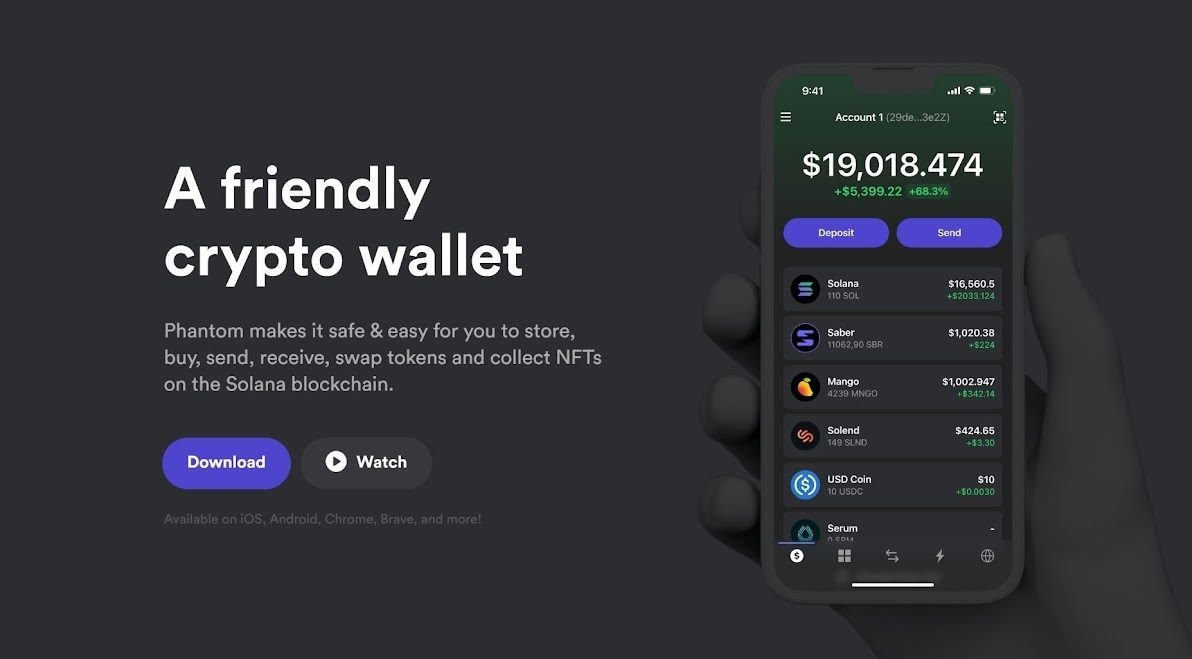
For most people, it’s Phantom. Setup takes a couple of minutes, transaction previews are actually readable instead of a wall of hex, and staking, swaps, and NFT support all live in one app. Plenty of Solana users treat it as the unofficial default wallet at this point. It also handles Ethereum and Polygon, and picked up a cross-device backup feature called Phantom Cloud Sync in 2026.
Source: Solflare
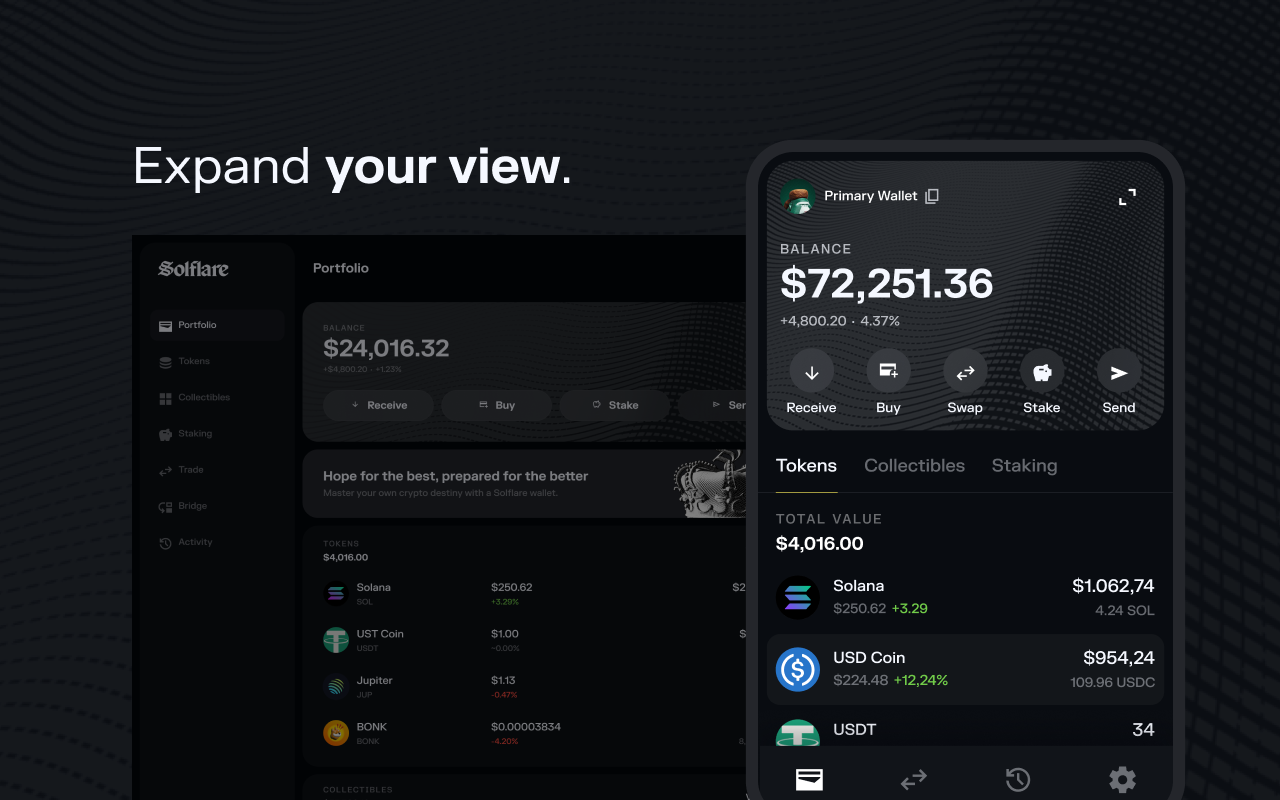
If staking is your main priority, look at Solflare instead. It was built by Solana community developers specifically for this chain, not bolted on as an afterthought to a multi-chain app, and it shows: direct validator delegation, a recovery feature called Solflare Guardian, and integration with both Ledger and Keystone for anyone who wants cold storage down the line. You can run it as a mobile app, browser extension, or plain web wallet.
Source: Backpack
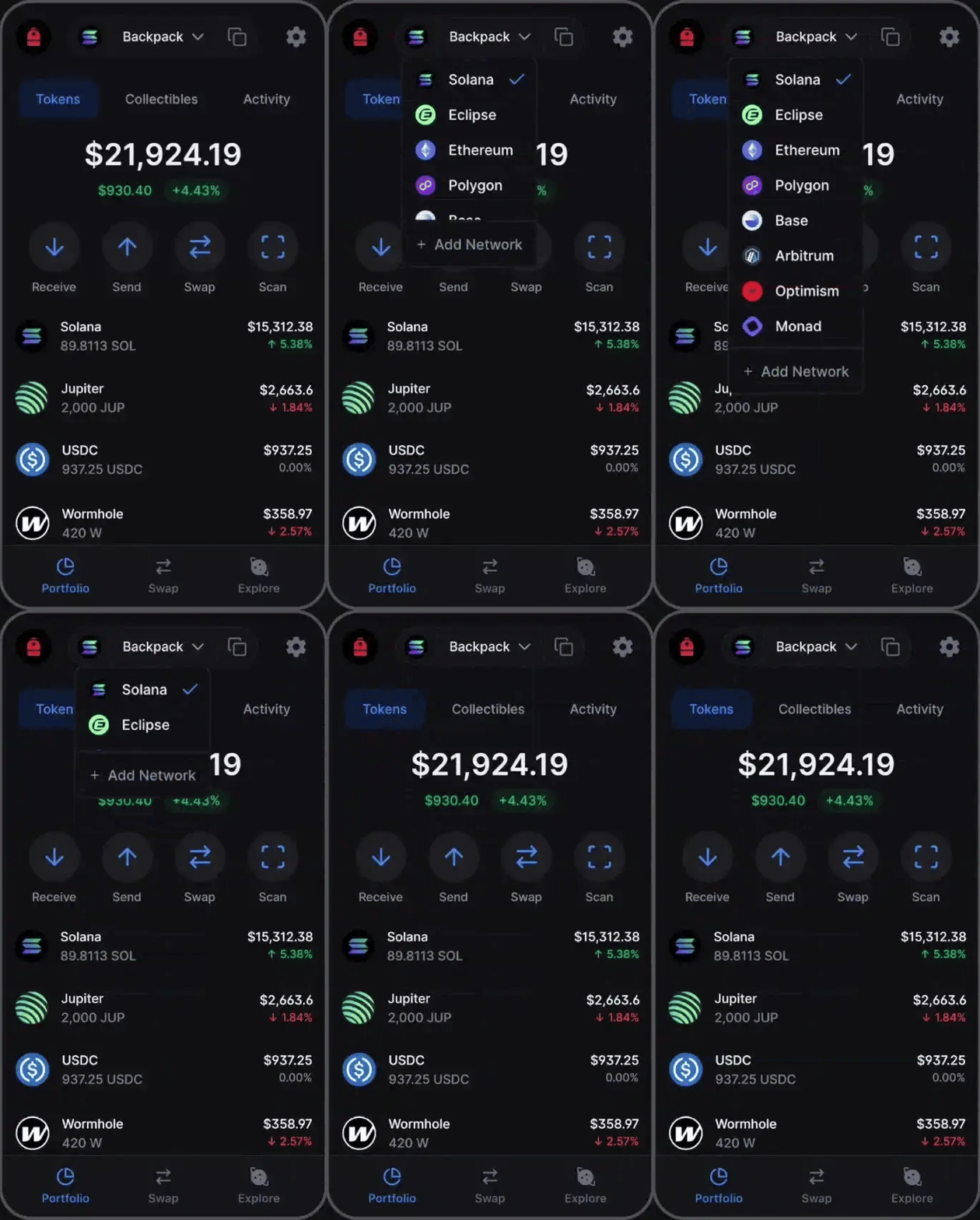
Heavy into NFTs? Backpack is worth a look, thanks to a feature called xNFTs that turns NFTs into small executable apps instead of static jpegs. And if you’d rather manage Solana alongside a dozen other chains in one place, Trust Wallet and Exodus both do that reasonably well, though neither goes as deep on Solana-specific features as Phantom or Solflare.
What Is the Best Hardware Wallet for Solana?
Source: Ledger
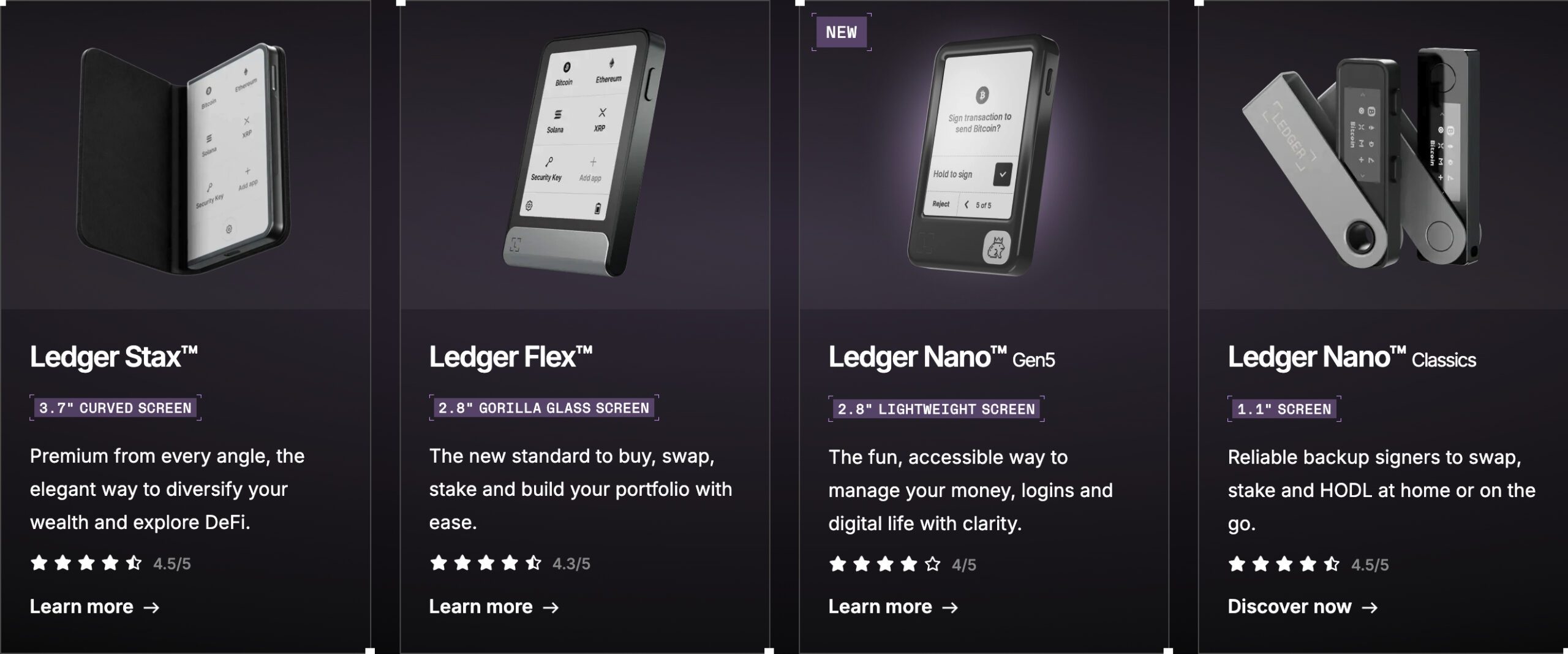
Ledger, by a wide margin. Models like the Nano X and the Stax plug directly into Phantom, Solflare, Backpack, and most other major software wallets, so you’re not locked into one ecosystem just because you bought the device. Keys stay isolated offline, transactions get signed securely even while the device is connected to a dApp, and the Ledger Live app takes care of firmware updates and account management on the software side.
In practice, most people run a two-wallet setup: Ledger holds the actual keys offline, while Phantom or Solflare handles the screen, transaction history, and dApp connections. It’s become something of a default recommendation once your balance climbs past a few thousand dollars, since you get the usability of a hot wallet interface without the keys themselves ever touching an internet-connected device.
How Do You Stake Solana Through a Wallet?
You can delegate SOL straight to a validator through Solflare, Phantom, or Ledger, no centralized exchange required, and you keep custody the whole time. Current yields land somewhere around 3.4% to 5.6% annually depending on the validator and provider, and rewards get paid out automatically every epoch and start compounding as soon as they’re restaked.
About 68.8% of all circulating SOL is staked right now, which works out to a staking market cap near $30.5 billion. Most validators only require 1 SOL minimum to get started. One thing that surprises people coming from other chains: Solana doesn’t currently enforce automatic slashing for ordinary validator faults, so the risk calculus is a bit different than staking on Ethereum or Cosmos. Also worth keeping in mind, issuance steps down over time, so whatever APY your wallet shows today will probably drift lower a year out.
Where Can You Buy or Exchange Solana?
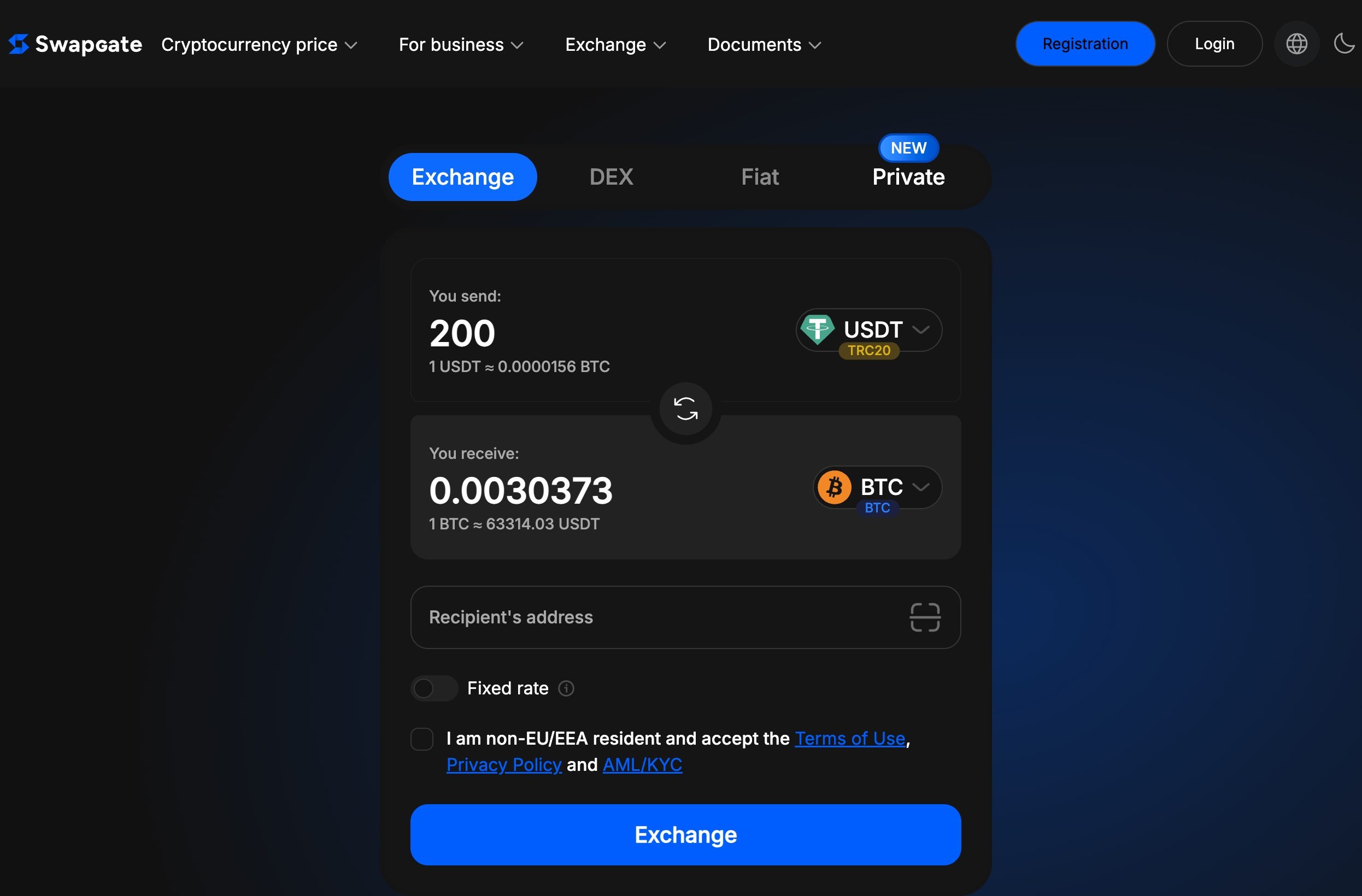
Two main routes here: mainstream exchanges that require identity verification, or no-KYC swap services that just convert one crypto into another without an account. Which one makes sense really comes down to whether you’re buying SOL with fiat for the first time or already holding crypto you want to convert.
Swapgate is a decent example of that second category. It handles both fiat-to-crypto and crypto-to-crypto trades, covering Bitcoin, Ethereum, Tether, and a long list of altcoins, SOL included. No account needed, and swaps are instant.
Whatever route you take, get your SOL into a wallet you actually control as soon as you can. Exchanges and swap platforms aren’t built for long-term storage, and sitting on a large balance there just adds platform risk you don’t need.
How Do You Keep a Solana Wallet Secure?
Same rule regardless of what wallet you use: never share your seed phrase, full stop. Don’t type it into a website, an app, or a support chat, no matter how legitimate it looks. Whoever has that phrase has permanent, irreversible access to your SOL and everything else in the wallet. No real support team will ever ask you for it, and if one does, that’s your answer right there.
Past that, actually read what you’re approving before you tap yes. A wallet’s whole job on Solana boils down to turning a complicated on-chain action into one approve button, and that’s exactly where malicious dApps try to sneak something past you. If your hardware wallet has its own screen, use it to double-check transaction details instead of trusting whatever your phone or laptop shows, since malware on that device could display something completely different from what actually gets signed.
Frequently Asked Questions
What is the best Solana wallet for beginners?
Phantom, mainly because it’s genuinely fast to set up and the transaction previews actually make sense.
You can create a wallet, connect to a dApp, and do your first swap or stake within a few minutes, and each step is labeled clearly enough that you won’t need a tutorial. It also plays nicely with a Ledger hardware wallet down the road, so starting with Phantom doesn’t box you into weaker security once your SOL balance grows.
Should I use a hot wallet or a hardware wallet for Solana?
Honestly, both. Keep a hot wallet like Phantom or Solflare for everyday stuff, and move bigger balances into something like Ledger.
A lot of people just keep a small spending amount in the hot wallet for regular transactions, staking, or NFT buys, and stash the rest in cold storage. That way, if the hot wallet or the device it’s on ever gets compromised, you’re only exposed on the smaller balance, not everything.
Can I stake Solana without using a centralized exchange?
Yes, Solflare, Phantom, and Ledger all let you delegate directly to a validator while keeping your keys the whole time.
The difference from exchange staking is custody: you pick your own validator and never hand over the underlying assets to a platform. Current yields run roughly 3.4% to 5.6% annually, and rewards land automatically every epoch.
Is Solflare better than Phantom?
Depends what you’re optimizing for. Solflare pulls ahead specifically for staking, not across the board.
Phantom is the stronger pick for general usability and works across Solana, Ethereum, and Polygon, which is why it’s the default for most people. Solflare sticks to Solana only, but goes deeper on staking tools, validator control, and hardware wallet support, so if those are what you actually care about, it’s the better fit.
Does MetaMask support Solana?
Not on its own, no, though Solflare’s MetaMask Snap lets you reach Solana dApps from inside MetaMask.
MetaMask was built for Ethereum and other EVM chains, so it can’t natively hold or send SOL. If you want proper native Solana support, you’re better off with Phantom, Solflare, or Backpack instead of trying to force it through MetaMask.
How much does a Solana-compatible hardware wallet cost?
Ledger’s Solana-compatible models run somewhere between $80 and $250, depending on which one you get.
The cheaper models still give you the same core offline-signing security as the pricier ones. What you’re paying extra for on the high end is usually a bigger screen, Bluetooth, or more storage for accounts, not fundamentally better protection.
Disclaimer: The material in this article is not financial or investment advice. Everything stated here reflects the author's personal view and should not be treated as a recommendation to trade or invest. We make no warranties regarding the accuracy, reliability or completeness of the information presented. Cryptocurrency markets are highly volatile and can move unpredictably. Before committing any funds, every investor, trader or crypto user should study several independent sources and check the regulations that apply in their own jurisdiction.