
The Short Version:
- Choose PAXG if: You prioritize strict regulation. It is issued by Paxos, regulated by the New York State Department of Financial Services (NYDFS), and highly accessible for smaller retail trades.
- Choose XAUT if: You want integration with the Tether ecosystem and plan to trade heavily on major crypto exchanges where Tether products dominate liquidity.
Let’s be honest for a second. Buying physical gold is kind of a headache.
Sure, holding a shiny gold bar in your hand feels incredible. It’s the ultimate traditional safe-haven asset. But what happens next? You have to figure out where to hide it, pay for a secure vault, insure it, and when it’s time to sell, you have to physically lug it to a dealer who will likely charge you a hefty markup. It is the financial equivalent of trying to store a grand piano in a studio apartment.
This is exactly why tokenized gold was invented.
By putting gold on the blockchain, you get the best of both worlds: the timeless value of the precious metal and the instant, borderless liquidity of cryptocurrency. You might hear people call it crypto gold or gold crypto, but the industry standard term is digital gold.
Today, two massive players dominate this space. In this guide, we are doing a deep dive into XAUT vs PAXG. We’ll look at who is behind them, how they are backed, what the fees look like, and ultimately, which one deserves a spot in your investment portfolio.
What Exactly is Digital Gold?

Before we pit PAXG vs XAUT, let’s make sure we are on the same page about how this technology actually works.
When you buy a gold-backed crypto token, you aren’t buying a synthetic derivative or an ETF (Exchange Traded Fund). You are buying digital ownership rights to actual, physical gold sitting in a highly secure, audited vault somewhere in the world.
One token usually equals one fine troy ounce of a London Good Delivery gold bar. Because these tokens live on blockchains (mostly Ethereum), you can send them to anyone, anywhere, 24/7, in a matter of seconds. You can even fractionally own gold down to tiny decimal points, making it incredibly accessible.
Deep Dive: What is Tether Gold (XAUT)?
If you have spent any time in the crypto space, you already know the name Tether. They are the massive company behind USDT, the undisputed king of stablecoins. Recognizing the demand for commodities on the blockchain, TG Commodities Limited (a company closely tied to Tether) launched XAUT.
So, what is the XAUT coin all about?
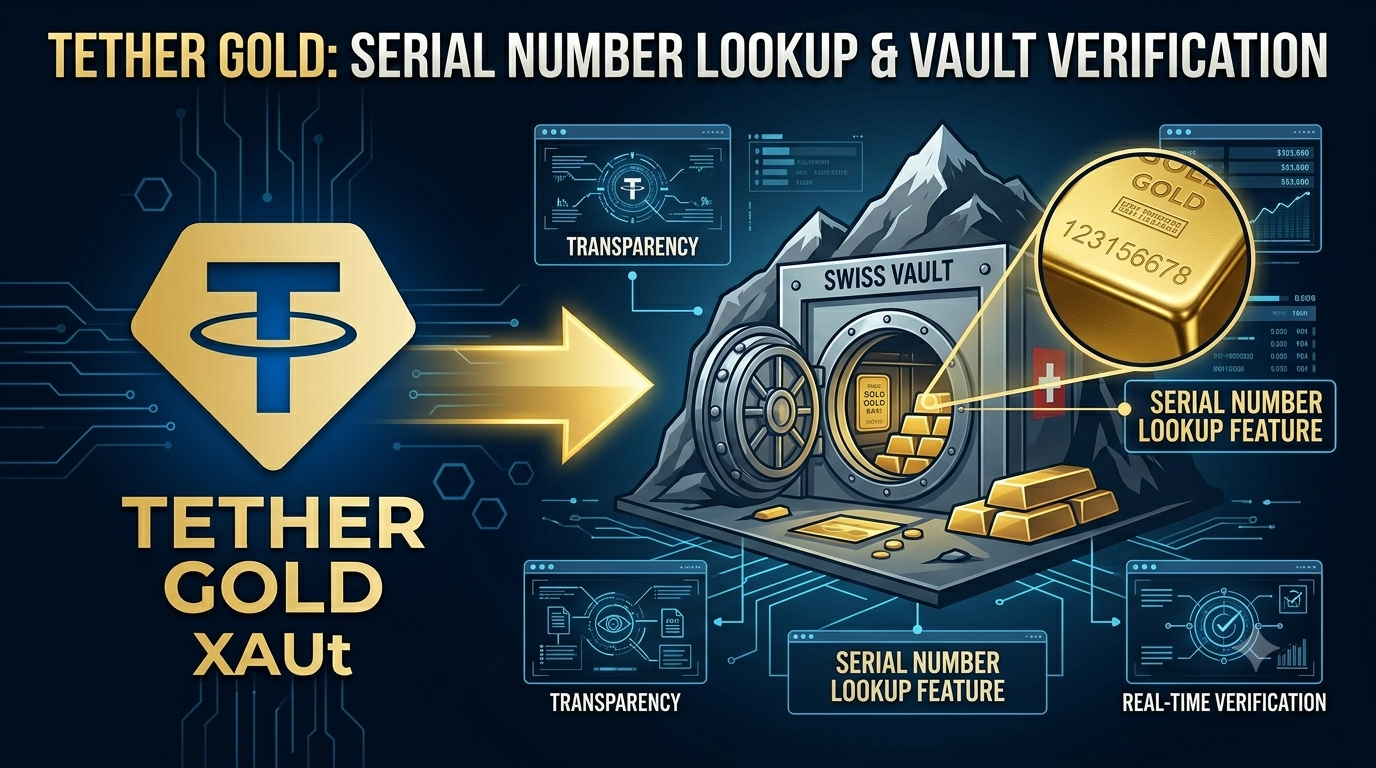
Every single XAUT token represents ownership of one troy ounce of physical gold on a specific London Good Delivery bar. The gold backing this Tether gold is securely stored in Swiss vaults.
One of the unique selling points here is that investors can actually look up the specific serial number, purity, and weight of the gold bar associated with their tokens. If you hold enough of it (a minimum of 430 tokens, which equates to an entire standard gold bar), you can literally request to have the physical gold shipped to you in Switzerland, or have Tether sell it and wire you the cash.
The Tether gold price is designed to track the spot price of physical gold perfectly. Because of Tether’s massive footprint in the crypto exchange world, XAUT benefits from deep liquidity pools, especially among institutional traders and crypto whales.
Deep Dive: What is Pax Gold (PAXG)?
On the other side of the ring, we have Pax Gold.
This token was launched by Paxos Trust Company, a powerhouse in the blockchain infrastructure space based in New York. If there is one word you need to associate with the PAXG coin, it is regulation.
Paxos operates under the strict regulatory eye of the New York State Department of Financial Services (NYDFS). In the wild west of cryptocurrency, having NYDFS approval is like having a golden ticket of trust.
Just like its competitor, one PAXG represents one fine troy ounce of a London Good Delivery gold bar. However, the gold backing paxgold is stored in Brink’s vaults in London, rather than Switzerland.
Paxos takes transparency incredibly seriously. They use a top-ranking auditing firm to publish monthly attestation reports, proving that the amount of physical gold in their London vaults perfectly matches the supply of tokens on the blockchain.
When you are trading PAXG, you might come across various trading pairs. You’ll often see it traded against fiat dollars (paxusd) or other stablecoins. Sometimes on decentralized exchanges or specific screeners, you might even see the combined ticker paxgusd to denote its US Dollar valuation.
The Head-to-Head Comparison: PAXG vs XAUT
Okay, let’s get down to the brass tacks. How do these two heavyweights actually compare when we look at them side-by-side?
1. Regulation and Trust
This is often the deciding factor for traditional investors moving into crypto.
- PAXG is the clear winner if you want regulatory peace of mind. Being overseen by the NYDFS means Paxos undergoes rigorous checks, balances, and capital reserve requirements. Furthermore, bankruptcy-remote structures ensure that even if Paxos were to go out of business, your gold remains completely yours and untouched by creditors.
- XAUT doesn’t have that same level of strict, US-based regulatory oversight. While Tether has vastly improved its transparency over the years, it still operates in a more globally decentralized, slightly less heavily regulated manner.
2. Fees and Transaction Costs
Nobody likes paying fees. Let’s look at what it costs to move this digital metal.
- XAUT does not charge custody fees. If you just want to hold the token in your wallet for ten years, it won’t cost you a dime in storage. However, creating or redeeming tokens directly through Tether requires a massive minimum and incurs a 25 basis point (0.25%) fee. Keep in mind, you will also pay standard Ethereum gas fees when moving the ERC-20 token.
- PAXG is also free of custody or storage fees. Paxos used to charge on-chain transaction fees, but they removed them to stay competitive. You will only pay the network gas fees (Ethereum, etc.) and whatever trading fees your chosen exchange charges.
3. Redemptions and Minimums
What if you actually want the shiny metal in your hands?
- XAUT: You need to be a big player. You must hold a minimum of 430 tokens (one full 400 oz bar, plus a little buffer) to redeem. At today’s prices, that’s a multi-million dollar requirement.
- PAXG: Paxos is much friendlier to retail investors. You can redeem physical gold through a network of physical gold retailers with much lower minimums (sometimes as low as a fraction of an ounce through specific partner platforms), or redeem for unallocated gold rights starting at just 1 PAXG.
4. Liquidity and Exchange Availability
If you want to buy or sell quickly without moving the market price, you need liquidity.
Both tokens are highly liquid, but they tend to live in slightly different neighborhoods of the crypto ecosystem. XAUT has incredible depth on exchanges that favor the Tether ecosystem (like Bitfinex). PAXG is widely listed on major US-friendly exchanges like Coinbase, Kraken, and Binance.
Comparison Table: XAUT vs PAXG
| Feature | Tether Gold (XAUT) | Pax Gold (PAXG) |
| Issuer | TG Commodities Limited | Paxos Trust Company |
| Regulation | Unregulated/Global | Highly Regulated (NYDFS) |
| Underlying Asset | 1 oz London Good Delivery Gold | 1 oz London Good Delivery Gold |
| Vault Location | Switzerland | London (Brink’s Vaults) |
| Blockchain | Ethereum (ERC-20) | Ethereum (ERC-20) |
| Custody Fees | Zero | Zero |
| Physical Redemption | Yes (High Minimum: 430 tokens) | Yes (Low Minimum: 1 token) |
Market Dynamics: How Do They Perform?
Because both tokens are pegged to the physical gold spot price, their charts look virtually identical. If gold goes up 2% in traditional markets, the Tether gold price and the price of PAXG will both go up roughly 2%.
However, in times of extreme crypto market stress, we sometimes see very brief “de-pegs.” If a major crypto exchange crashes, panicked traders might sell their crypto gold for USDT, causing the token to temporarily drop a fraction of a percent below the spot price of real gold. Conversely, during crypto bull markets, high demand can push the token prices slightly above the spot price (a premium).
Arbitrage traders constantly monitor these tiny discrepancies between PAXG vs XAUT and the real-world gold price. When a gap opens, they buy the cheaper asset and sell the more expensive one, which rapidly forces the prices back into perfect alignment.
The Verdict: Which Should You Choose?
So, after looking at all the evidence, which one belongs in your digital wallet?
If you are a retail investor, a US citizen, or someone who highly values strict government oversight and audits, PAXG is generally the superior choice. The backing by the NYDFS, the monthly attestations, and the lower barriers to entry for physical redemption make it an incredibly safe, transparent way to hold digital gold.
On the flip side, if you are an institutional trader already deeply embedded in the Bitfinex/Tether ecosystem, or if you specifically prefer your physical gold to be vaulted in Switzerland rather than London, XAUT is a fantastic, highly liquid option.
Both represent a massive leap forward from the days of hiding coins in a safe. They take the world’s oldest money and inject it into the world’s newest financial rails.
Frequently Asked Questions (FAQ)
Is digital gold safe?
Yes, top-tier tokenized gold like PAXG and XAUT are very safe. They are backed 1:1 by real, physical gold stored in professional, institutional vaults. However, you still carry “smart contract risk” (the risk of a bug in the blockchain code) and the responsibility of securing your own crypto wallet.
Can I trade PAXG for cash?
Absolutely. You can easily trade the PAXG coin for US dollars or stablecoins on almost any major cryptocurrency exchange. Look for trading pairs like paxusd or paxgusd to see the direct conversion rates.
Does XAUT pay dividends or interest?
No. Just like a physical block of gold sitting on a table, XAUT coin does not yield interest on its own. Its value comes entirely from the market price of the gold backing it. (Though some decentralized finance (DeFi) platforms may allow you to lend it out for a yield, which carries extra risk).
Which one is better for small investors?
PAXG is generally better for smaller, retail investors because it is widely available on consumer-friendly apps and exchanges, and it has much lower minimum requirements if you ever decide you want to redeem your token for physical metal.
Disclaimer: The material in this article is not financial or investment advice. Everything stated here reflects the author's personal view and should not be treated as a recommendation to trade or invest. We make no warranties regarding the accuracy, reliability or completeness of the information presented. Cryptocurrency markets are highly volatile and can move unpredictably. Before committing any funds, every investor, trader or crypto user should study several independent sources and check the regulations that apply in their own jurisdiction.