
If you are researching for Dogecoin mining, the big 2026 reality is simple: this is no longer a casual GPU pastime. Modern DOGE mining revolves around Scrypt ASICs, low power costs, and merged mining with Litecoin through AuxPoW. People searching how to mine Dogecoin, how do you mine Dogecoin, or even Doge coin mining usually want the same answer: what hardware works now, what setup is realistic, and whether the math still makes sense. Dogepedia still explains the fundamentals well, but the hardware market has moved on; today’s serious miners are comparing Antminer L9-class and newer Scrypt machines, not gaming PCs.
What is Dogecoin Mining and How Does It Work?
Dogecoin’s Technical Foundation
Dogecoin is a Proof-of-Work chain that uses a simplified form of the Scrypt algorithm, with a target block time of about one minute and difficulty readjustment after every block. In plain English, miners compete to produce valid hashes; the first valid block gets accepted by the network. What makes Dogecoin different from Bitcoin mining, for mining purposes, is not just the meme branding but the Scrypt ecosystem around it. That matters because Scrypt opened the door to a dedicated class of ASIC hardware and, more importantly, to Dogecoin’s merged-mining relationship with Litecoin.
The Role of Miners
Miners do two jobs at once: they bundle and validate transactions, and they make the network harder to attack by contributing hashpower. Dogepedia notes that higher total hashrate means greater network security and resistance to attacks. That is why modern mining Dogecoin is less about a hobbyist “lottery ticket” and more about participating in a large, industrialized security market. A modern Dogecoin miner or DOGE coin miner is effectively operating a Scrypt ASIC and selling security to a merged Litecoin-Dogecoin ecosystem.
Block Rewards and Inflation: How Many New DOGE are There?
Dogecoin’s block reward is permanently fixed at 10,000 DOGE per block from block 600,000 onward, and the chain targets roughly one block per minute. That means Dogecoin creates about 10,000 new DOGE per minute, around 14.4 million per day, and roughly 5.26 billion per year. The important nuance is that issuance is fixed in absolute terms, not capped, so inflation falls as a percentage over time even though new coins continue to be minted every minute.
Hardware Requirements: Can You Still Mine Dogecoin on a PC?
The Death of GPU Mining: Why Graphics Cards No Longer Cut It
Yes, you can technically mine Dogecoin on PC, and yes, people still ask how to mine Dogecoin on pc. But it is no longer a profitable way to mine the Dogecoin network because Scrypt ASICs dominate the hashrate race. Dogepedia says profitable Dogecoin mining now uses specialized Scrypt ASICs, while GPU mining leads to close to no profits, high energy bills, and only a tiny contribution to total network hashrate. So if your goal is to mine Dogecoin on pc, treat it as a learning exercise, not a business model.
The Rise of Scrypt ASICs: Exploring the Bitmain Antminer L-Series
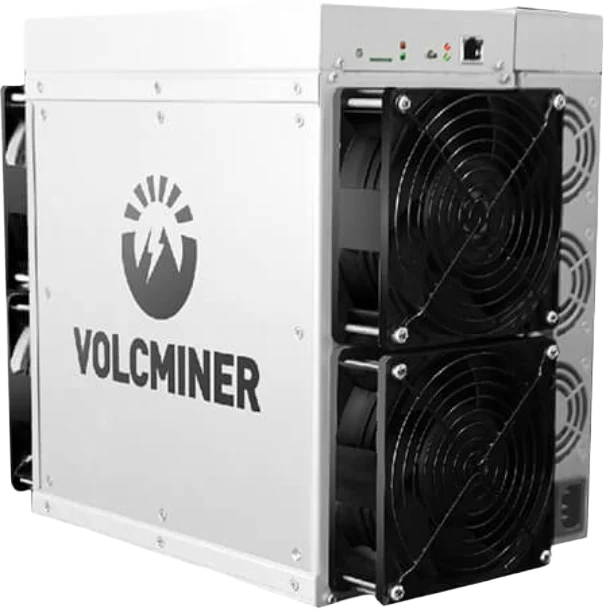
VolcMiner D1. Source: Asicminervalue
This is where Dogepedia’s fundamentals are still right, but 2026 hardware is more advanced than the older guides imply. The official Dogecoin docs explain that profitable mining now uses ASICs, yet current Scrypt competition is being shaped by machines such as the Bitmain Antminer L11 Hyd 2U, Bitmain Antminer L9, VolcMiner D1, and ElphaPex DG1-class miners. Bitmain’s official L9 spec lists 16 GH/s at 3,360W, while ASIC Miner Value lists the L11 Hyd 2U at 35 GH/s and 5,775W.
Here is a fresh snapshot table. Hashrate and power figures come from manufacturer or miner-spec pages; profitability figures are current calculator estimates at $0.10/kWh, so treat them as moving targets rather than fixed promises.
| Scrypt ASIC (2026 snapshot) | Hashrate (GH/s) | Power Consumption (W) | Daily Profitability at $0.10/kWh |
| Bitmain Antminer L11 Hyd 2U | 35 | 5,775 | ~$6.14/day |
| Bitmain Antminer L9 | 16 | 3,360 | ~$2.43/day |
| VolcMiner D1 | 18.5 | 4,250 | ~$0.77/day |
| ElphaPex DG1 | 11 | 3,420 | ~$-1.33/day |
The real takeaway is not that one machine is “the winner” forever. It is that profitability now lives on a razor’s edge. Different calculators already disagree by meaningful amounts because they model fees, price feeds, and merged-mining revenue differently. That is exactly why the best Dogecoin miner for one person can be the wrong machine for another.
Home Mining vs. Industrial Farms
Dogepedia is blunt here: ASICs are loud, hot, expensive, and usually belong in a garage, basement, shed, or other ventilated space. That is the hidden cost many new miners miss. A home setup can work, especially with one machine and cheap power, but industrial farms have better ventilation, bulk electricity pricing, and staff who can handle firmware, downtime, and failed hashboards. For most people, Dogecoin mining software is no longer a Windows app on a gaming rig; it is the ASIC’s onboard firmware, pool settings, and a monitoring dashboard.
Dogecoin Mining Methods: Solo vs. Pool vs. Cloud
Solo Mining: Why It’s Nearly Impossible
Solo mining still exists, but practically it feels like buying a very expensive lottery ticket. Dogepedia explains that as network hashrate grew, the chance of finding blocks solo dropped drastically, which is why mining pools became standard. With one-minute blocks and today’s industrial hashrate environment, solo mining only makes sense if you are operating serious scale and are comfortable with extremely uneven payouts.
Dogecoin Mining Pools: Joining Forces for Consistent Payouts
A Dogecoin mining pool combines many miners’ hashpower and smooths rewards into smaller, more regular payouts. Dogepedia says most Dogecoin pools also allow Litecoin mining at the same time because of merged mining, and it notes that pool fees are normally around 1%. That is the center of 2026 DOGE mining economics: you usually are not choosing between Litecoin or Dogecoin; you are choosing a Scrypt pool that lets you earn both. Current ASIC Miner Value pool listings for Scrypt ASICs include names such as F2Pool, NiceHash, and EMCD, which shows where much of the present-day activity sits.
Cloud Mining: Is It a Scam or a Viable 2026 Strategy?
Cloud mining is not automatically fake, but it is high-risk and often inferior to simply buying DOGE. U.S. regulators have warned about crypto schemes that claim to invest customer money in mining farms and promise high returns with little risk, while the FTC also warns that bogus crypto opportunities remain common. In practice, if a cloud-mining contract does not clearly disclose the machine model, maintenance fee, electricity assumption, payout formula, and jurisdiction, assume the operator has structured the deal to favor themselves, not you.
Setting Up Your Dogecoin Mining Operation
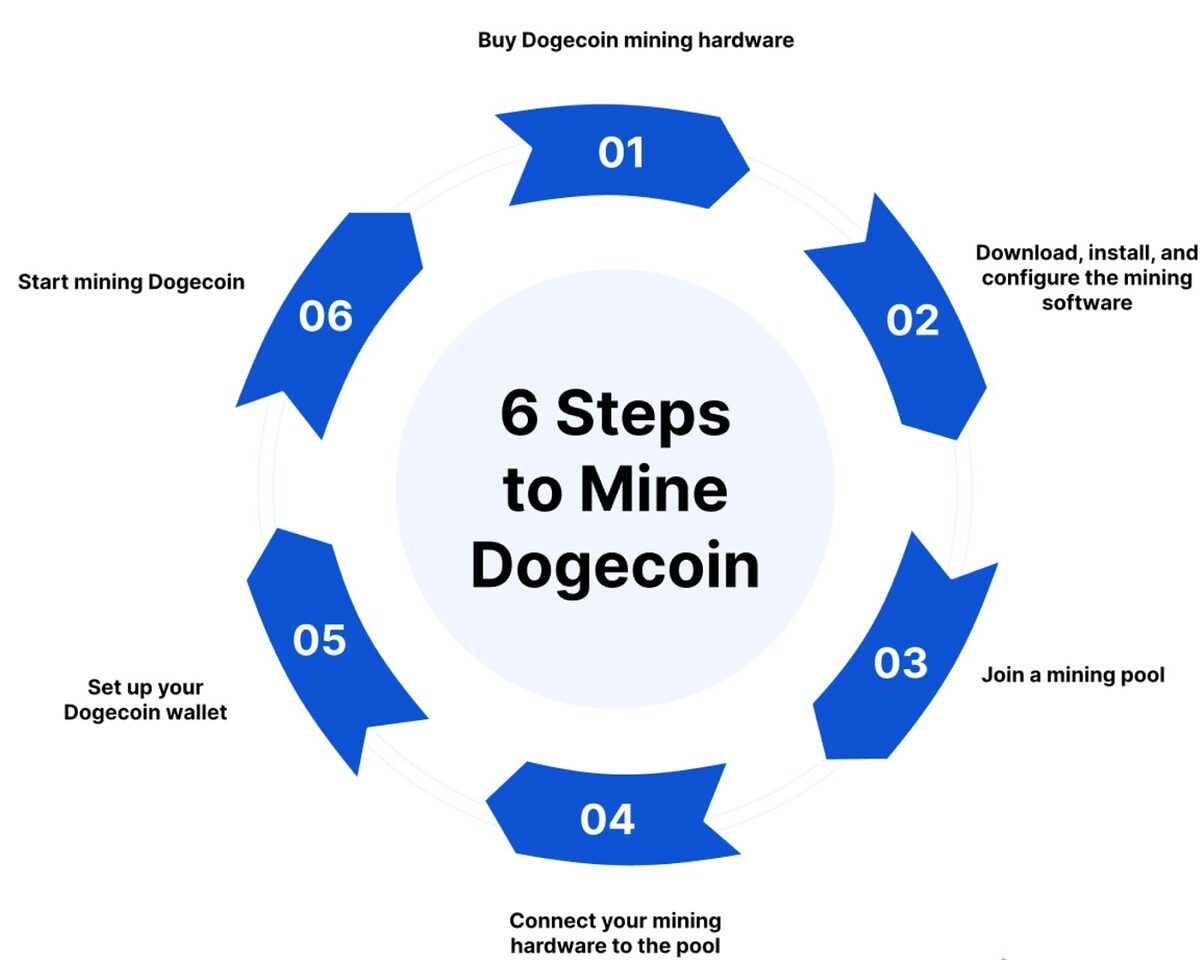
Source: Bitget
Step 1: Choosing the Right Scrypt ASIC Miner
Start with electricity, not hashrate. A flashy machine can still be a bad buy if your local rate is $0.14/kWh and your room needs extra cooling. Dogepedia also stresses that older ASICs are less profitable than newer ones and that electricity remains critical to profitability. So when people ask for the “best” Dogecoin miner, the honest answer is: pick the machine with the strongest efficiency that you can power, cool, and maintain consistently.
Step 2: Selecting a Dogecoin Wallet
For mined rewards, wallet choice should match your goals. The official wallets page currently lists Dogecoin Core as a full-node, self-custodial wallet for Linux, Windows, and macOS, and it also lists hardware-wallet options such as Ledger and Trezor. MultiDoge, by contrast, looks like a legacy option now: its GitHub “latest” release is still v0.1.7 from January 2016, and it is not part of the current official wallets list. So in 2026, Dogecoin Core is the strongest desktop-native choice for advanced users, while hardware wallets are the better long-term storage option for most miners cashing out or stacking rewards.
Step 3: Configuring Your Miner for a Multi-Pool
This is the step where AuxPoW becomes practical instead of theoretical. Dogepedia explains that Dogecoin was modified to allow merged mining with other Scrypt coins, especially Litecoin, so miners can receive rewards from multiple blockchains for the same amount of work. In setup terms, that usually means logging into your ASIC’s web panel, entering the stratum URL, worker name, and payout address for your chosen pool, and letting the pool handle the merged payout logic. Most users asking how do you mine Dogecoin in 2026 are really asking how to join this Litecoin-plus-Dogecoin flow efficiently.
Step 4: Monitoring Your Hashrate and Temperature
Dogepedia recommends assigning a static local IP and using monitoring tools to watch status pages, temperatures, and uptime. That advice matters because Scrypt ASIC profitability gets destroyed by downtime, thermal throttling, and misconfigured pools. If you are running home gear, set alerts for fan failure, rejected shares, and rising temperatures before you even worry about squeezing another few cents per day out of revenue.
Profitability Analysis: Is Dogecoin Mining Worth It in 2026?
Calculating Your ROI: Electricity Costs vs. Daily Revenue
ROI begins with simple math. An Antminer L9 at 3,360W uses about 80.64 kWh per day, which costs about $8.06 daily at $0.10/kWh. A current profitability snapshot puts that same machine at roughly $2.43/day net profit under favorable assumptions, which sounds decent until you remember the hardware itself costs real money and revenue can move quickly. That is why how to mine Dogecoin is partly a technical question and mostly a cost-accounting question.
How Market Volatility Affects Mining Strategy
Profitability is not static because DOGE price, LTC price, difficulty, pool luck, and fees all move. CoinWarz’s March 11, 2026 Dogecoin calculator snapshot used a DOGE price of $0.0917, a difficulty of 63,956,379.19, and a one-minute block time, which shows how thin margins can be when price softens. A miner who believes in a future DOGE run may accept lower short-term profitability and hold coins, while a cash-flow miner may auto-sell part of production to stabilize electricity expenses.
Reporting Your Mined Dogecoin to the Authorities
Tax treatment depends on the country, but do not ignore it. In the U.S., the IRS says virtual currency is treated as property, and selling it can trigger capital gains or losses. In the U.K., HMRC says that if mining does not amount to a trade, the value of tokens at the time of receipt is generally taxable as income, and later disposal can trigger Capital Gains Tax. So keep records for receipt date, fair-market value, fees, wallet transfers, and sale price from day one.
Dogecoin Mining vs. Alternatives: Buying vs. Mining
Is It Better to Buy DOGE on an Exchange?
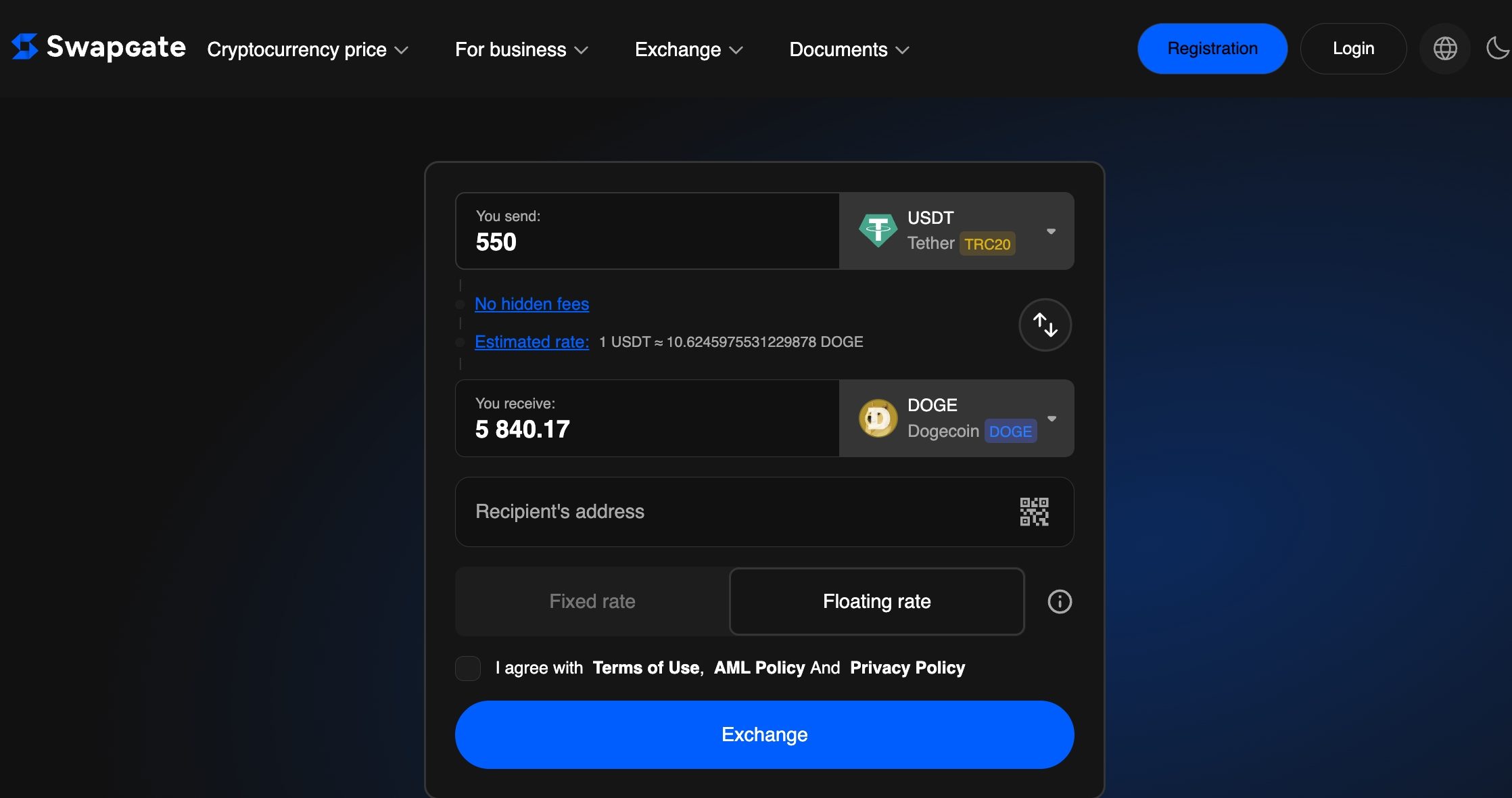
For many people, yes. Buying spot DOGE removes hardware risk, fan noise, failed boards, shipping delays, and uncertain ROI. When several Scrypt ASICs hover around breakeven at $0.10/kWh, buying DOGE directly can outperform mining unless you have unusually cheap electricity, free cooling, or a reason to accumulate coins gradually through operations. You can always exchange USDT to DOGE on Swapgate.
Staking vs. Mining: Exploring Dogecoin “Earn” Programs
Dogecoin itself is a PoW chain, so it does not support native staking. What many platforms call “Dogecoin staking” is usually lending, savings, or DeFi yield on wrapped DOGE, not protocol-level validation. That can still be useful, but it introduces different risks: custodial exposure, smart-contract risk, bridge risk, and token-wrapping complexity. In other words, it is not a substitute for Dogecoin mining; it is a separate yield strategy with a different risk stack.
Lending Your DOGE: Generating Yield Without Hardware
Lending DOGE can be simpler than running ASICs, but the tradeoff is counterparty risk. You are outsourcing trust rather than buying machines. That may suit passive holders, but it will never strengthen the Dogecoin network the way mining Dogecoin does through actual hashrate contribution.
FAQ
Can I mine Dogecoin on my iPhone or Android?
Not meaningfully. If GPUs already earn close to no profit on the Dogecoin network, phones are even less realistic. Be especially cautious with mobile “cloud mining” apps: security researchers have documented fake crypto-mining apps that mainly served ads or pushed paid subscriptions rather than delivering real mining economics.
How long does it take to mine 1 Dogecoin?
As a rough snapshot, CoinWarz estimated that a 17 GH/s setup consuming 3,450W would need about 0.019 days to mine 1 DOGE at then-current difficulty on March 11, 2026. In the real world, pool payouts are smoothed, fees apply, and difficulty changes, so treat any “time to mine 1 DOGE” number as a moving estimate, not a guarantee.
What is the best mining pool for Dogecoin in 2026?
There is no universal winner. Dogepedia says most pools let you mine Litecoin and Dogecoin together and usually charge around a 1% fee, so your best choice depends on payout method, server location, fee structure, minimum payout, and reputation. Large Scrypt pool ecosystems visible on current miner pages include F2Pool, NiceHash, and EMCD.
Does Dogecoin mining damage my computer?
If you are using a PC or GPU nonstop, sustained heat, fan wear, and dust can absolutely shorten component life. If you are using an ASIC, the risk shifts to noise, heat, and poor ventilation. Dogepedia explicitly recommends cool, well-ventilated housing because improperly configured ASICs are prone to hardware failure. So yes, bad thermal management can damage equipment; good thermal management is part of the job.