
Choosing the best Polygon wallet is not the same task it was in the MATIC-only era. In 2026, Polygon users are dealing with POL as the live gas and staking token on Polygon PoS, a separate Polygon zkEVM environment, and an AggLayer roadmap that aims to make cross-chain usage feel far more unified than the old bridge-everything workflow. Polygon itself says the MATIC-to-POL migration is 99% complete and that every transaction on Polygon PoS has used POL as the native gas token since September 2024.
That is why people searching for the best Matic wallet are asking the same question: which wallet handles Polygon PoS, zkEVM, DeFi, NFTs, and future AggLayer-connected flows without creating unnecessary friction? The answer is no longer “just install MetaMask and move on.” The best 2026 Polygon wallets are the ones that understand POL, support multiple Polygon environments, and make approvals, staking, and cross-chain activity safer.
Polygon 2.0 in 2026
From MATIC to POL: Ensuring Your Wallet Supports the Token Evolution
Polygon’s own migration updates make the naming change clear: POL has succeeded MATIC as the native gas and staking token on Polygon PoS, and users still holding MATIC on Ethereum can migrate 1:1 through Polygon Portal. Polygon also says 99% of MATIC on Polygon has already migrated. So if a wallet still presents Polygon as a MATIC-only experience, it is not exactly broken, but it is no longer current. That is why a 2026 best Matic wallet guide has to be a POL-first guide with legacy MATIC context, not the other way around.
The AggLayer Revolution: Why Unified Liquidity Matters
AggLayer is the reason wallet quality suddenly matters more. Polygon’s documentation says AggLayer is designed so assets maintain their identity across chains, operations are atomic across multiple networks, and users can interact with multiple chains as if they were one network. In theory, that reduces the old pain of wrapped assets, fragmented liquidity, and bridge delays. In practice, as of March 2026, mainstream wallets still access that future mostly through connected dApps and EVM-compatible flows rather than a dedicated “AggLayer mode” button. That means the best wallet is the one that handles multi-chain EVM interactions cleanly today while staying ready for AggLayer-connected apps tomorrow.
zkEVM vs. PoS Chain: Does Your Wallet Support Both Networks?
This is the part many old wallet guides skip. Polygon PoS and Polygon zkEVM are not the same environment. Polygon’s wallet docs explicitly show that MetaMask users need to add the relevant network configurations, and they note that the same process used for Polygon PoS also works for Polygon zkEVM. So if you plan to do more than hold POL, your wallet should support both environments or at least pair cleanly with a companion wallet that does.
Top Hardware Wallets: Uncompromising Security
Ledger Nano X & Stax: The Gold Standard for Polygon Cold Storage
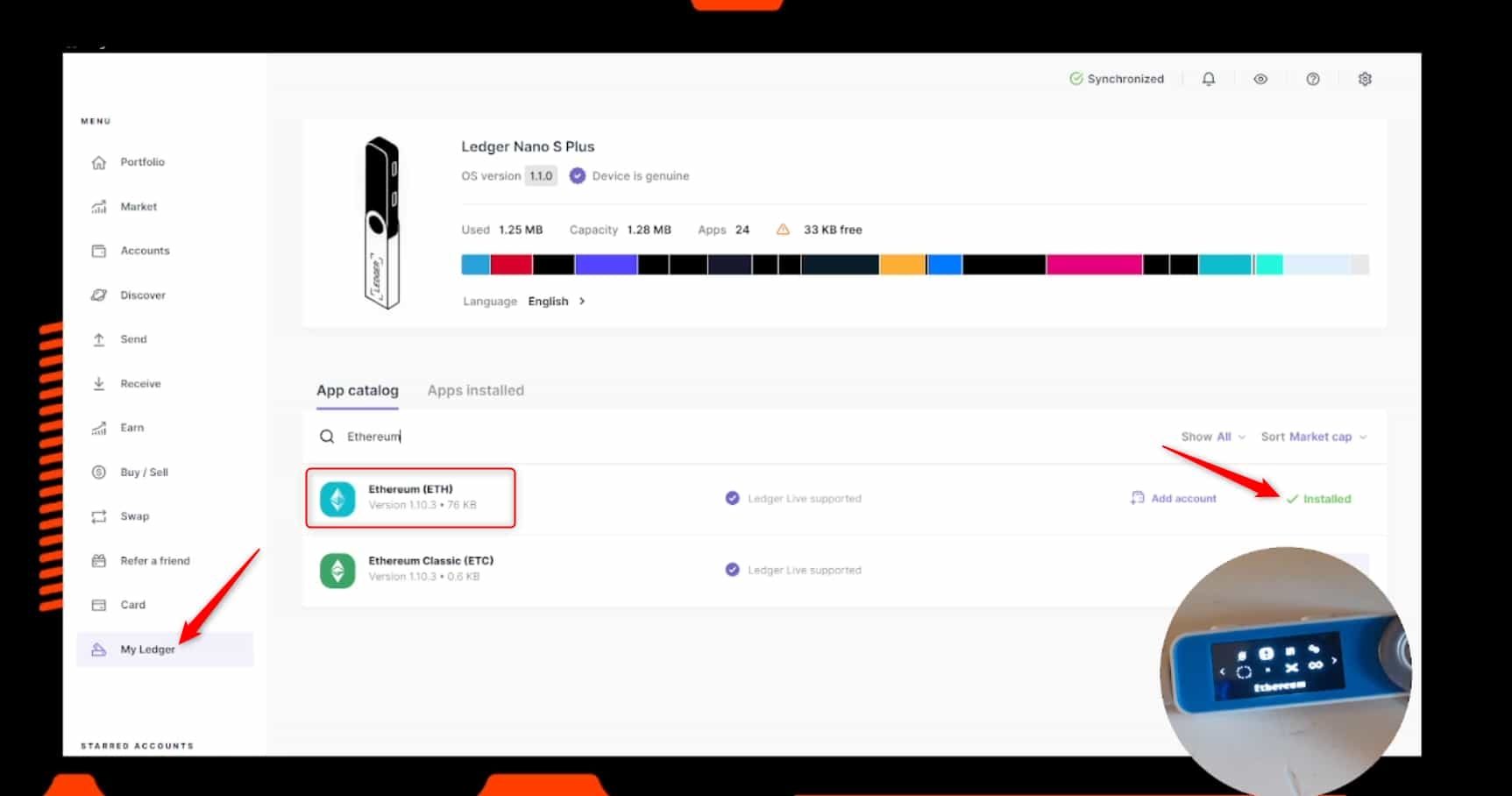
Source: Ledger
Ledger remains the most mainstream answer for people who want the best Polygon wallet for long-term holding rather than daily experimentation. Ledger’s support pages show native Polygon (POL) account support in Ledger Wallet, and Ledger also documents POL staking flows through Polygon Web Wallet and Yield.xyz. That makes Ledger the easiest hardware recommendation for users who want to secure POL offline and still retain access to staking and DeFi through companion apps.
Ledger is best thought of as the safest “store first, interact second” option. For Polygon zkEVM and deeper dApp use, most people will still pair it with MetaMask or WalletConnect-based tooling. If your main goal is cold storage, that is not a flaw. It is exactly the point.
OneKey Classic 1S: Optimized for the Polygon 2.0 Ecosystem
OneKey is the strongest alternative if you want open-source credibility plus a smoother DeFi posture than traditional cold wallets. OneKey’s GitHub states that its hardware and software are open source, and its Polygon Bridge & Staking page lists support for Ethereum, Polygon, and Polygon zkEVM, with a built-in dApp browser and phishing checks. That is a very strong 2026 combination for anyone who wants a hardware-first Polygon crypto wallet that still feels modern.
The OneKey Classic 1S is also still an actively sold product on OneKey’s official shop, which matters because plenty of wallet roundups recommend models that are quietly disappearing. If you care about open-source verification and hardware-level confirmations while using Polygon tools regularly, OneKey is one of the best current picks.
Trezor Safe 3: Open-Source Protection for Your Digital Assets
Trezor’s Polygon documentation is refreshingly clear: Polygon PoS is natively supported in Trezor Suite, while Polygon zkEVM requires using the Trezor hardware wallet with a third-party app such as MetaMask. Trezor also says no action was needed for assets already on Polygon PoS when the network migrated from MATIC to POL. That makes Safe 3 a great choice for users who want transparent cold storage and are comfortable using a companion wallet for more advanced Polygon activity.
Best Mobile & Browser Wallets
MetaMask: Still the King of Custom RPCs and Polygon dApps
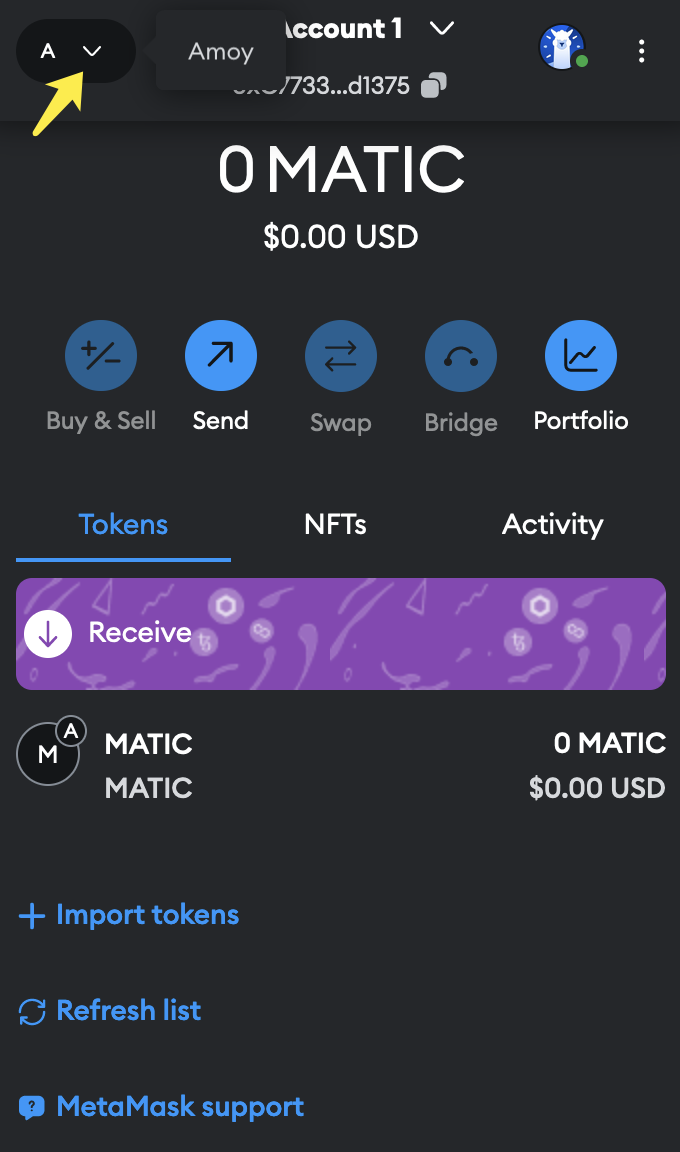
MetaMask Wallet. Source: Polygon Docs
MetaMask is still the default recommendation because Polygon’s own docs are built around it. Polygon shows users how to add both Polygon PoS and Polygon zkEVM to MetaMask, while MetaMask’s own POL pages show direct fiat buying, swapping, bridging, and NFT support. For a user who wants the most compatible Polygon network wallet with the most tutorials, integrations, and community support, MetaMask remains the benchmark.
Its weakness is not lack of capability. It is that the user experience can feel a bit manual compared with newer wallets. That is why MetaMask is still the easiest universal recommendation, but not always the most elegant daily-use answer.
Rabby Wallet: The Best User Experience for Polygon Power Users
Rabby is the wallet I would point power users to first. Rabby says it supports all EVM-compatible networks, has integrated 90 networks, and includes portfolio tracking, transaction simulation, a security engine, and approval revoking. That combination makes it one of the best daily drivers for users moving between Polygon PoS, zkEVM, and the wider EVM universe.
In practical terms, Rabby is the strongest answer for someone who wants a better best Polygon wallet experience than stock MetaMask without leaving the EVM world. If you actively use DeFi, mint NFTs, and sign lots of contracts, Rabby’s pre-signing simulation and cleaner approval visibility are real quality-of-life upgrades.
Trust Wallet: Versatile Multi-Chain Support with Native Staking
Trust Wallet is better as a flexible mobile hub than as a Polygon specialist. Its Polygon wallet page highlights self-custody, buy, sell, swap, and fiat support, and the main Trust Wallet site says it supports millions of assets across 100+ blockchains. It also has a dedicated NFT section that supports Polygon NFTs. That makes it a very good Polygon nft wallet and a very convenient choice for people who want one mobile app for everything.
Where Trust falls behind is in advanced Polygon tooling. It is not the best place to live if you are constantly adding testnets, experimenting with zkEVM, or auditing transaction details before every signature. It is better for convenience than for protocol-heavy work.
Phantom: The New Contender in the Polygon and EVM Space
Phantom is now a real Polygon option, not just a Solana wallet dabbling in EVM. Polygon announced Phantom’s Polygon support, and Phantom later added in-wallet swapping Ethereum to USDT and Polygon tokens plus a buy flow for crypto inside the app. The catch is that Phantom’s supported-chains documentation still shows a narrower EVM scope than MetaMask or Rabby. That makes Phantom a strong choice if you already use Phantom across Solana and Polygon, but not the best pick for deep Polygon tinkering.
Best Smart Contract & Account Abstraction (AA) Wallets
Safe (formerly Gnosis Safe): Best for Institutional Security
For teams, DAOs, treasuries, and serious high-value accounts, Safe is still the standard. Safe’s docs say the canonical smart contracts are deployed to many EVM networks, and its help center explicitly lists both Polygon and Polygon zkEVM in gas sponsorship support. That is exactly the kind of infrastructure you want for shared custody, approval workflows, and higher-value operational security.
ZeroDev & Kernel: Exploring Gasless Transactions on Polygon
Polygon already supports ERC-4337 account abstraction on Polygon PoS, and ZeroDev’s docs show why that matters: sponsor gas, pay gas with ERC-20s, batch transactions, and spend tokens on any chain without bridging. This is the clearest preview of what the next generation of Polygon wallet UX looks like: fewer approvals, less gas friction, and more app-like flows.
Sequence Wallet: The Premier Choice for Polygon Gamers
Sequence matters because Polygon now treats wallet infrastructure as part of the product stack, not an afterthought. Polygon’s own blog describes Sequence on Polygon as a coherent model for identity, permissions, recovery, and security, while Sequence’s wallet pages emphasize one address across an ecosystem, smart sessions, and secure signer isolation. For gaming and branded consumer apps, Sequence is one of the strongest Polygon-aligned wallet models in the market.
Best Wallets for Polygon Staking and DeFi Yields
Staking POL: How to Earn Native Rewards Directly from Your Wallet
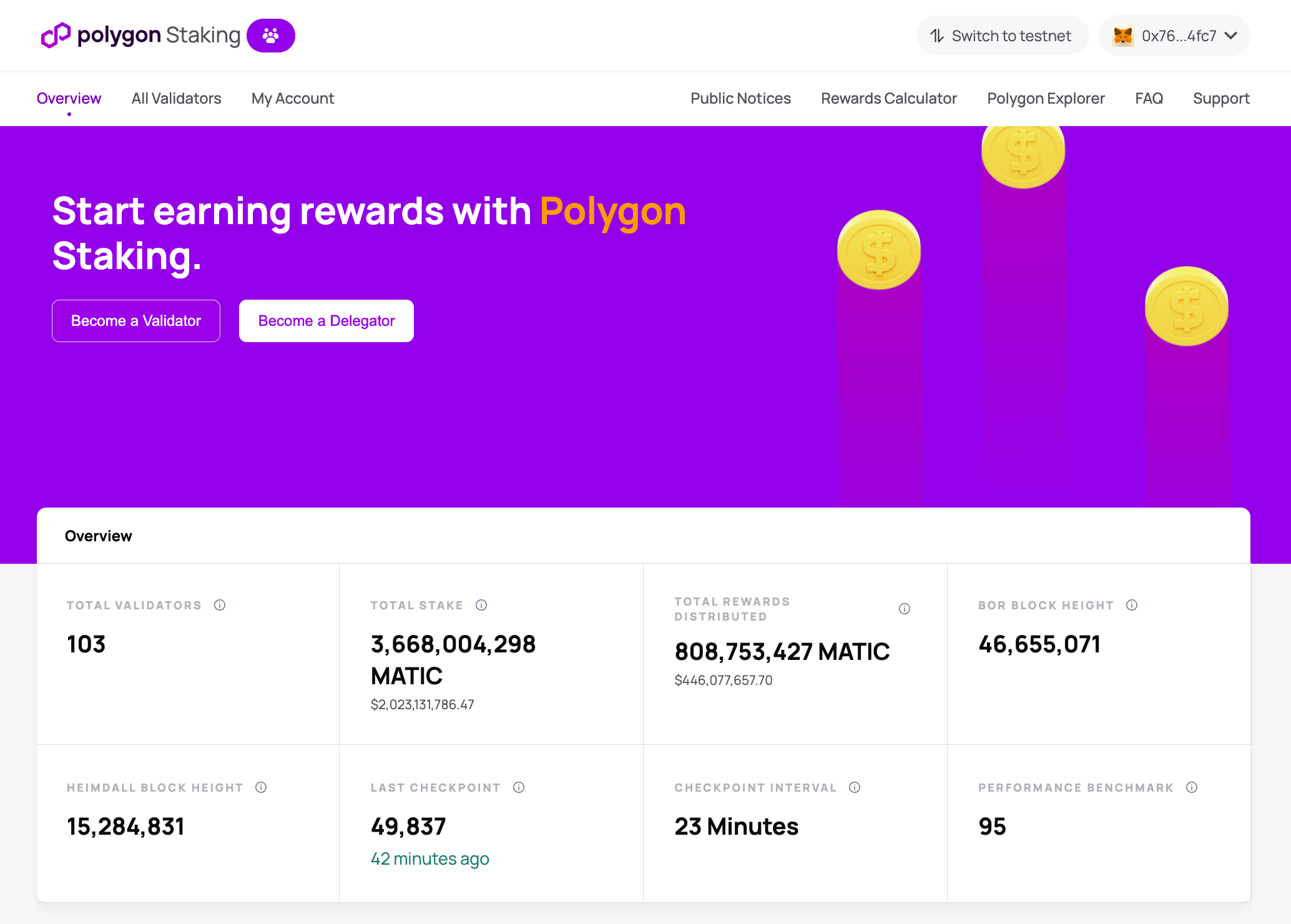
Source: Polygon Docs
Polygon’s staking docs say delegators need POL and ETH on Ethereum mainnet, because staking happens on Ethereum wallets due to Polygon’s dual-client architecture. The official dashboard also notes that MATIC can still be delegated in some flows, but rewards are paid in POL. That means the best staking wallets are the ones that pair smoothly with the official staking dashboard: MetaMask, Ledger, Trezor through MetaMask, and OneKey via WalletConnect.
Interacting with Polygon zkEVM: Best Wallets for Low-Latency DeFi
For zkEVM DeFi, MetaMask and Rabby are the most practical retail choices because they handle EVM networks broadly and let you add or switch Polygon zkEVM with minimal friction. Safe also belongs on that shortlist for team or treasury use, while OneKey and Trezor become stronger when paired with those software wallets rather than used alone.
Liquid Staking Options: Managing stPOL and MaticX
This is where outdated Polygon articles really show their age. Polygon now promotes official liquid staking with sPOL, which lets users deposit POL and receive sPOL while continuing to use that position in DeFi. Stader’s MaticX is still live as a liquid staking option too. But Lido’s Polygon staking UI has been sunset since late 2024 and fully wound down by mid-2025, so old “just use stMATIC on Lido” advice is no longer current.
How to Choose the Right Polygon Wallet for Your Needs
Security Audit: Closed-Source vs. Open-Source Wallet Software
If code transparency matters to you, Trezor, OneKey, and Safe are stronger fits. Trezor says it is built on open-source security, OneKey says its hardware and software are open source, and Safe says its related source code is open source. That does not automatically make them better for every user, but it does matter if you value verifiability as part of your security model.
Ease of Use: Evaluating Fiat On-Ramps and Swap Fees
If you want simple funding, MetaMask, Trust Wallet, and Phantom all have official fiat-buy flows. MetaMask also bundles bridging and swapping, which helps everyday users move into POL without extra exchanges. Trust Wallet is the easiest all-in-one mobile app. Phantom is good if you already live across Solana and Polygon.
Ecosystem Synergy: Which Wallets Connect Best to Polygon Marketplaces?
If you mainly use marketplaces, games, and DeFi dApps, MetaMask and Rabby remain the safest general-purpose answers. If you specifically want a Polygon NFT wallet with cleaner mobile presentation, Trust Wallet and Phantom are friendlier. If you are building or managing a game economy, Sequence is the more strategic choice.
Here is the practical comparison table for 2026:
| Wallet | Type | Polygon PoS | Polygon zkEVM | AggLayer-ready | Security model | Key features |
| Ledger Nano X / Stax | Hardware | Yes | Via companion wallet | Via dApps | Self-custody | POL account support, staking via WalletConnect/Yield.xyz |
| OneKey Classic 1S | Hardware | Yes | Yes | Via dApps | Self-custody | Open source, dApp browser, phishing checks |
| Trezor Safe 3 | Hardware | Yes | Via third-party app | Via dApps | Self-custody | Native PoS in Suite, open-source stack |
| MetaMask | Software | Yes | Yes | Yes, through EVM dApps | Self-custody / optional smart accounts | Custom RPCs, fiat on-ramp, NFT support |
| Rabby | Software | Yes | Yes | Yes, through all EVM chains | Self-custody | Transaction simulation, approvals, portfolio view |
| Safe | Smart account | Yes | Yes | Yes | Self-custody smart account | Multisig, gas sponsorship, team security |
The PoS/zkEVM entries come from official wallet and Polygon support pages. “AggLayer-ready” is the honest 2026 interpretation: no major retail wallet has a standalone AggLayer interface yet, but EVM wallets that already handle Polygon PoS, zkEVM, WalletConnect, and cross-chain dApps are the ones best positioned for AggLayer-connected workflows.
Security Best Practices for the Polygon Ecosystem
Handling the AggLayer: Avoiding Phishing Scams
The more Polygon becomes a multi-chain environment, the easier it is for fake bridge and fake upgrade prompts to fool users. Polygon’s own migration was designed to be smooth, and if you already held assets on Polygon PoS, the POL change largely happened automatically. Any wallet prompt telling you to “urgently migrate” without using official Polygon tools deserves skepticism.
Revoking Permissions: Using Tools Like Revoke.cash
Token approvals are still one of the easiest ways to lose funds after signing the wrong contract. Revoke.cash says it supports 100+ networks and lets you inspect and revoke approvals, while Rabby already includes approval management as part of the wallet experience. On Polygon, that is not optional hygiene anymore. It is routine maintenance.
Seed Phrase Hygiene: Physical Backups vs. Cloud Storage
MetaMask’s own getting-started guide still gives the correct timeless advice: your secret recovery phrase is the master key to your wallet and should be kept offline in a secure place. For large POL balances, physical backup beats convenience. Encrypted cloud storage is better than nothing, but not better than disciplined offline backup.
FAQ: Essential Questions for Polygon Users
What is the best Polygon wallet?
For most people, Rabby is the best Polygon wallet in 2026 because it supports all EVM chains, simulates transactions before signing, and handles approvals better than most rivals. MetaMask is the easier beginner choice, while Ledger or OneKey are better for long-term cold storage.
Is MATIC still used, or do I need to convert to POL?
POL is now the live native gas and staking token on Polygon PoS. Polygon says 99% of MATIC on the network has already migrated, and PoS assets were upgraded automatically. If you still hold legacy MATIC on Ethereum, Polygon Portal offers a 1:1 migration path.
Can I use a hardware wallet with Polygon zkEVM?
Yes, but usually through a companion app. Trezor says Polygon PoS is native in Trezor Suite, while zkEVM requires a third-party wallet such as MetaMask. OneKey supports Polygon, Ethereum, and Polygon zkEVM through its app and dApp browser, and Ledger users generally access advanced Polygon features through companion connections too.
How do I recover my POL if I lose my phone?
If you use a self-custody wallet, your POL is recoverable with your seed phrase, passkey recovery method, or hardware device backup, depending on the wallet. That is why the recovery setup matters more than the phone itself. Lose the phone and keep the backup, and your funds are still recoverable. Lose both, and no wallet can save you.
Disclaimer: The material in this article is not financial or investment advice. Everything stated here reflects the author's personal view and should not be treated as a recommendation to trade or invest. We make no warranties regarding the accuracy, reliability or completeness of the information presented. Cryptocurrency markets are highly volatile and can move unpredictably. Before committing any funds, every investor, trader or crypto user should study several independent sources and check the regulations that apply in their own jurisdiction.